



The character of leather
Here is an interesting piece of information. While researching leather, one artisan told us:
“You know, the world-famous brands make only one bag from a single hide. When you consider the direction of the fibers, the durability, the beauty, that's the only conclusion you can reach. It's the only way a bag can be used and loved for generations without warping.”
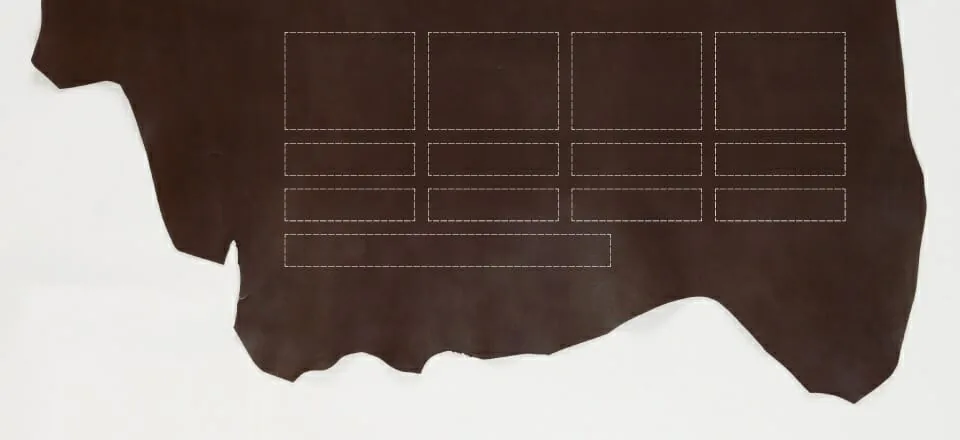
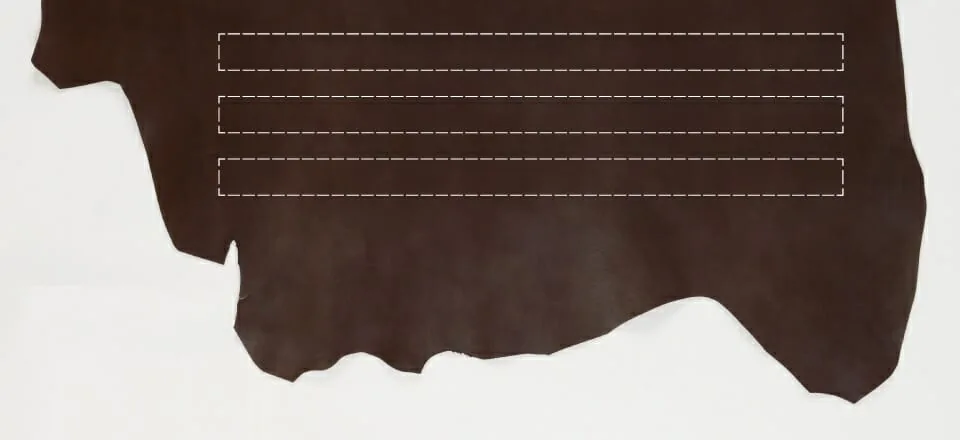
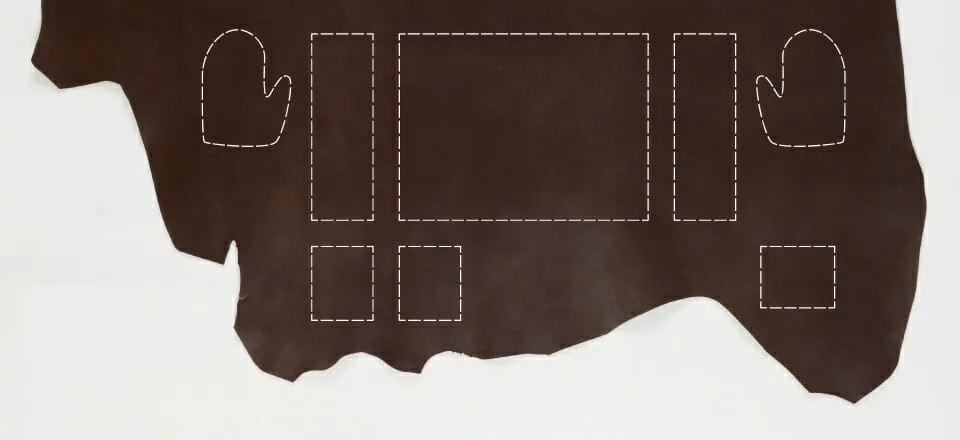
Leather's fibers run radially outward from the back, and to build something that “doesn't warp,” the part of the hide you cut from is what counts.
Using material that way, however, puts the price well beyond most people's reach. To get a durable leather item at a price that matches the product and stays within reach, the answer is to choose a maker whose proper artisans take responsibility for what they make. Many people have probably had an item stretch out with use—one possible cause is that it was made from leather taken from around the belly. And parts of the hide are not the only thing artisans care about: the stitching and thread chosen to suit them matter too. Most leather items are made from parts cut from the best sections, arrived at through trial and error. Strangely enough, knowing this makes the items you already own feel all the more dear.
How leather goods use the hide
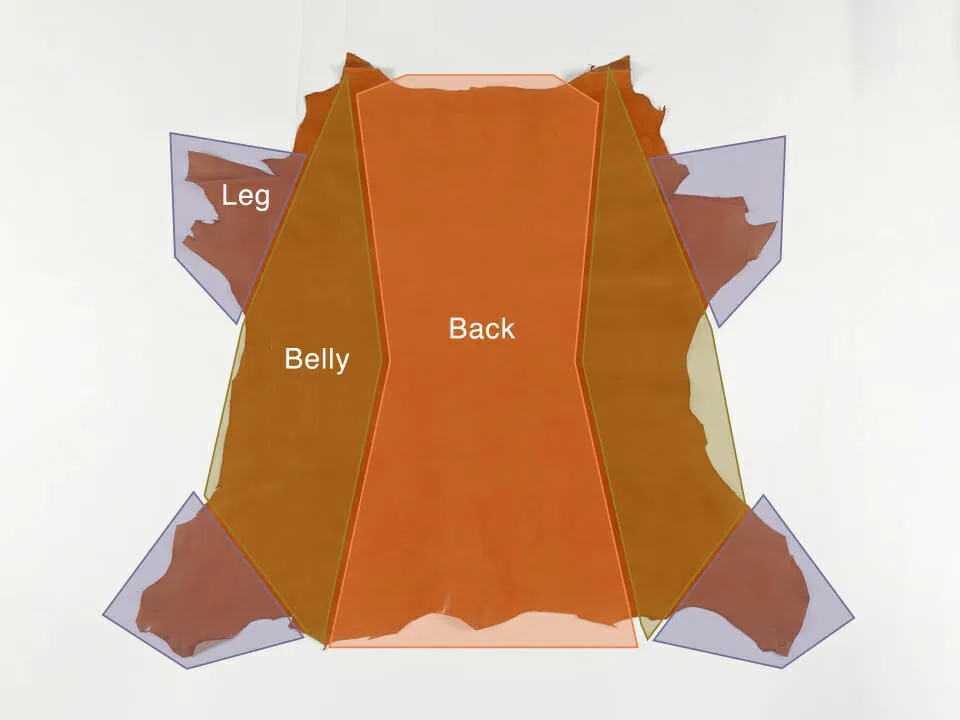
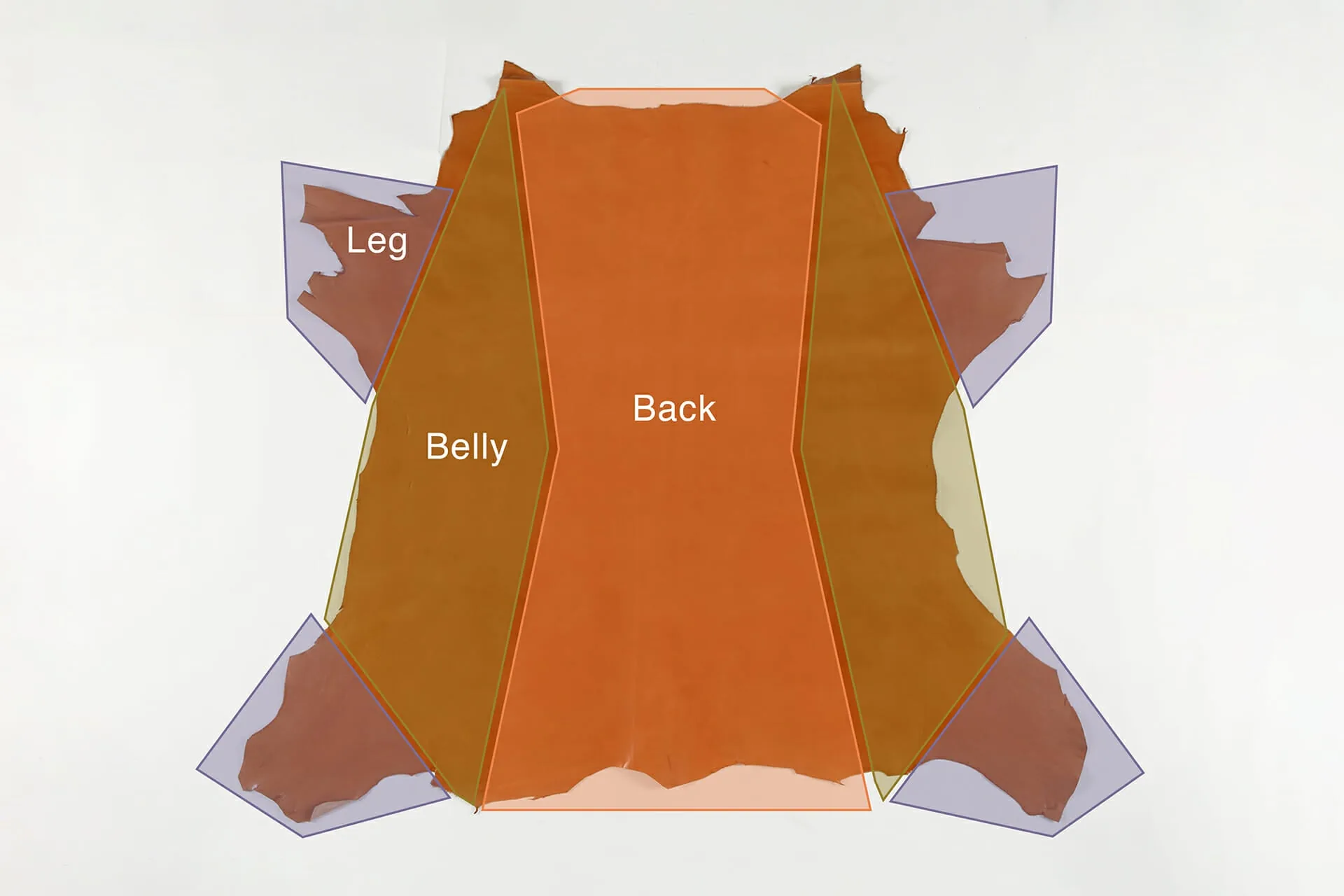
To make it easier to work with, a hide is cut symmetrically down the back. This is called “back-splitting” (sewari). Shown here is a whole cowhide before processing, also known as a whole hide (marukawa).
Back: known as the strongest part, with a high fiber density
Although shaved to a uniform thickness during processing, the back has a high fiber density. Compared with the belly, it is heavier and firmer. Even when made into a bag, it resists stretching and warping, so it is often used for the bottom and side panels.
Belly: soft and lightweight
Soft, light, and easy to work, its drawback is that it stretches. It is therefore used for bag linings and sometimes for shoe insoles. The very edge of the belly is so soft that it is hardly ever used.
Leg: strong, with a distinctive fiber density
The legs comprise the forelegs and hind legs; they are thick and well suited to working. Each has its own fiber density, and the hind legs have the denser fibers. Leg leather is used for bag handles and small goods such as wallets.