



Carrying on tradition
In Japan, leather-working techniques were brought by artisans who came from the continent, known by names such as “Oshikawa no Koma” and “Komabe.” In other words, the history of leather in Japan goes back more than 1,000 years. Tanning flourished from that time in the Banshu Himeji region through a repeated sequence of steps: treating the rawhide with salt from the Seto Inland Sea, rinsing it in the shallows, soaking it in the river over a stony riverbed, removing the hair, salting, moistening, applying rapeseed oil, kneading, bleaching and washing. Close to the sea, Himeji was truly an ideal place for working leather.
Leather was worked with similar techniques in other regions as well. These methods remained in use until the Edo period, when Japan opened its doors to other countries, and leather was prized for saddles, document boxes and more. Vegetable tanning and chrome tanning, the mainstream methods today, were introduced in the Meiji era and continue to the present.
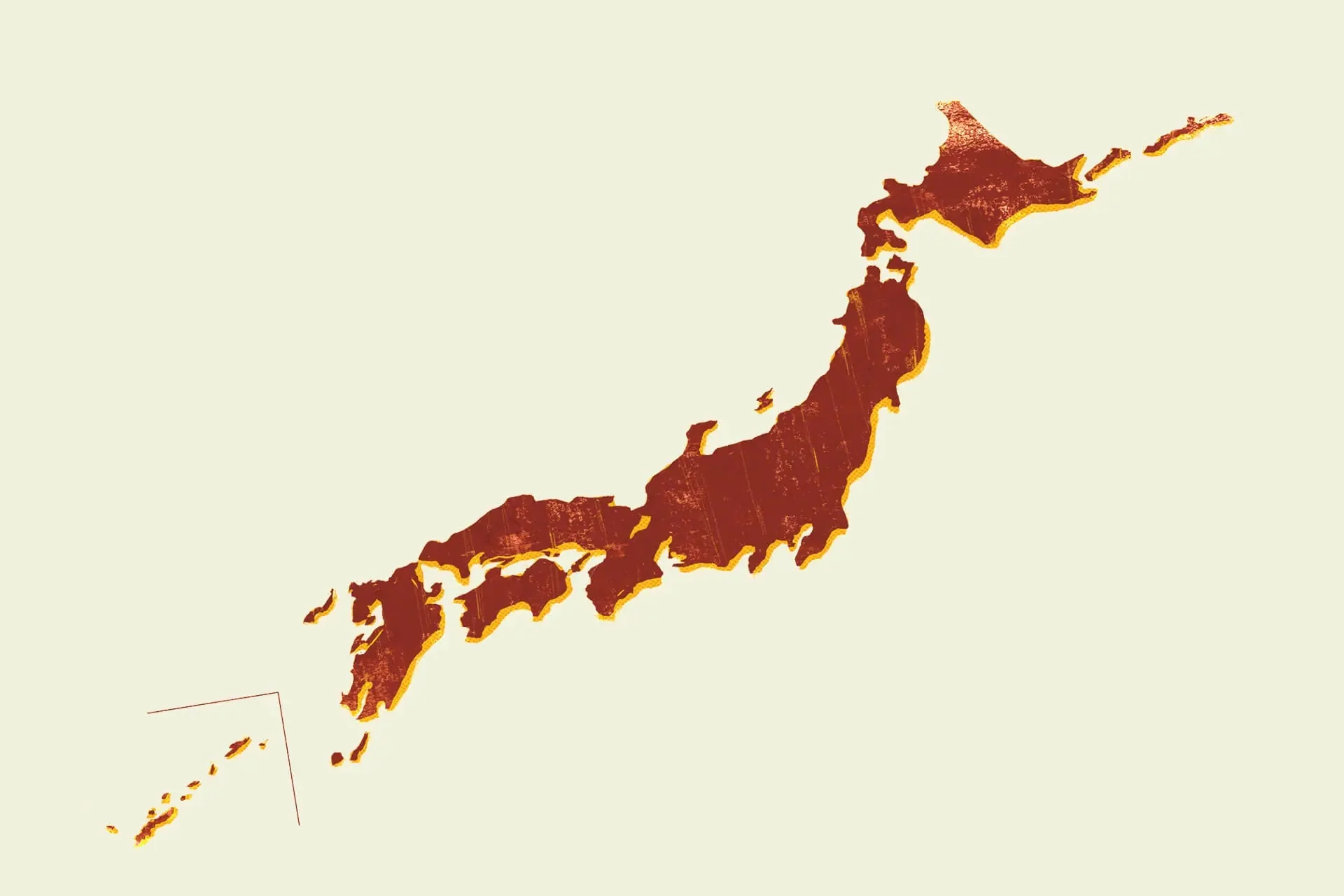
Leather culture 01: Hokkaido & Tohoku
Hokkaido, where a distinctive culture flourished
Hokkaido is known for its distinctive climate and harsh winters. What kind of leather was handed down there? In the long-established Ainu culture, not only animal hides but also salmon skin was tanned and used for shoes and other everyday items. In the Tohoku region, where horse breeding and ranches have been numerous since the Asuka period, footwear making has a long history, and in Yamagata and Fukushima prefectures the craft still lives on as a local industry.
Leather culture 02: Kanto
Techniques developed through cottage industry
Tokyo has long been a center for making pouches and bags. Around Asakusa, factories producing not only bags but also shoes, belts and other leather goods line the streets. Numerous tanneries in the greater Kanto area supply the leather they use. In Tokyo specifically, the specialty is pigskin. With large rivers such as the Sumida and Arakawa, the area is well suited to tanning, and many workshops operate on a cottage-industry scale. Another distinctive feature is the many factories that process reptile and other exotic leathers.
Leather culture 03: Chubu
Koshu Inden, a deerskin craft still handed down today
Most notable is Koshu Inden: deerskin decorated with patterns, made either with the fusube smoking technique or with lacquer. It has been used for armor, accessories and more. Koshu Inden originated in the domestic production of decorated Indian leather presented to the shogunate in the mid-Edo period. It was once made throughout Japan, but today the technique survives in Koshu. Over time the products have changed form and are now used for bags and more, enjoying enduring popularity.
Leather culture 04: Shikoku
Japan’s leading glove-making region
The Shikoku region is home to Higashikagawa City, where more than 90% of Japan’s leather gloves are made. Many of the gloves used by top athletes in baseball, golf and other sports are said to be made here. Why is the leather industry so thriving here? One reason, it is said, lies in the land itself: the region’s warm climate, low rainfall and many rivers are well suited to leather processing. Here is Japanese craftsmanship the world can admire.
Leather culture 05: San’yo & San’in
Growth rooted in a major home of the Japanese sword
The San’in and San’yo regions, where fine steel was produced, are known for making Japanese swords. Sword hilts and scabbards were decorated with “same-gawa,” or shark skin. Here the word “same” (shark) is easily misunderstood: the “shark skin” used on Japanese swords was in fact stingray. This stingray skin, now also used for wallets and other small goods, did not come from waters near Japan; it was imported from the South China Sea and the Indian Ocean. Hard, with a distinctive pattern of round and oval nodules, stingray leather was a perfect match for the beauty of the Japanese sword.
Leather culture 06: Kansai
A land where tanning skills have been handed down since ancient times
The history of leather here is long, and leather was being worked even before the Nara period. Himeji’s tanning techniques are especially famous, and both the skills and the artisan spirit are still handed down today. The number of tanning businesses far exceeds that of other areas, at nearly three times that of Tokyo, which ranks second in adult cattle hide production. With large rivers flowing through it and the sea close by, Himeji’s very geography suits leather processing. “Shiro-nameshi” (white-tanned leather), prized for its beauty and strength and used widely for everything from armor and weaponry to horse tack and taiko drums, is another of Himeji’s signature leathers. Until recently its survival was in doubt, but efforts to preserve the technique are gradually emerging. Also in Hyogo Prefecture is Toyooka, the city of bags, where 70% of Japan-made bags are said to be produced. Its origins lie in making willow wicker trunks (yanagi-gori), and it too boasts more than 1,000 years of history. It is also famous for having Japan’s only “bag industrial park.”
Leather culture 07: Kyushu
A home of women’s footwear and horses
Since the dawn of Japanese history, Kyushu has served as the country’s gateway to the outside world. From the medieval to the early modern period, civilization arrived from China; in the early modern era, a steady stream of new techniques never seen before flowed in from Western countries. And it was precisely here that leather-making methods “landed” with immigrants from the continent. Kitakyushu City, long a center of this exchange, is known today for producing women’s footwear. Kumamoto Prefecture is renowned as one of Japan’s leading horse-breeding regions. With its warm climate, livestock farming, which supplies the raw material for leather, also thrives.