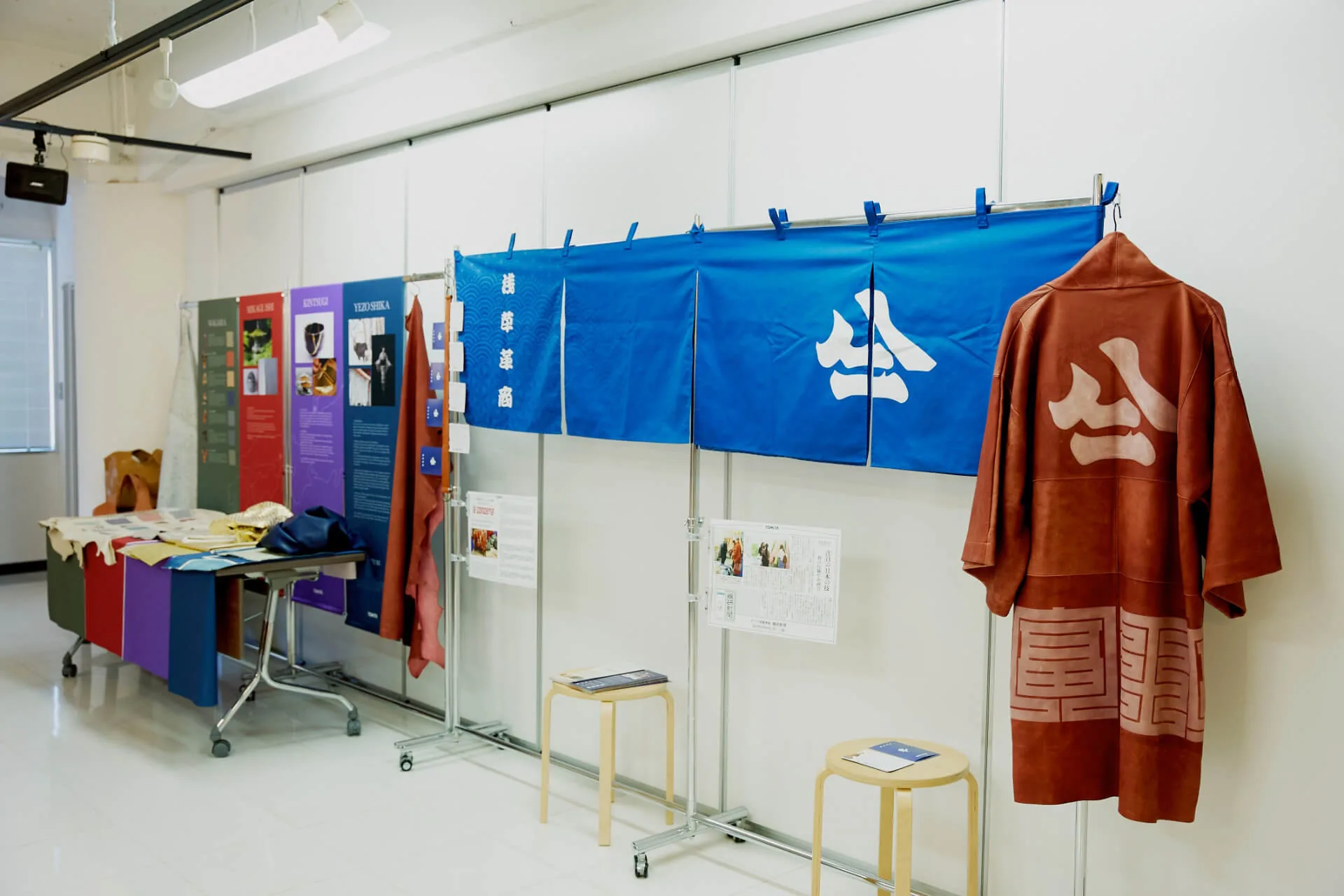
Founded in 1923, Tomita Kogyo is a long-established company known for its forward-looking approach. In today's age of diversity, creating added value—not only around seasonal trends but around market needs and functionality—is essential. The company was quick to focus on “sustainability,” turning it into projects it actively drives forward.
LEZZA BOTANICA — leather-making that makes use of by-products of food and plants
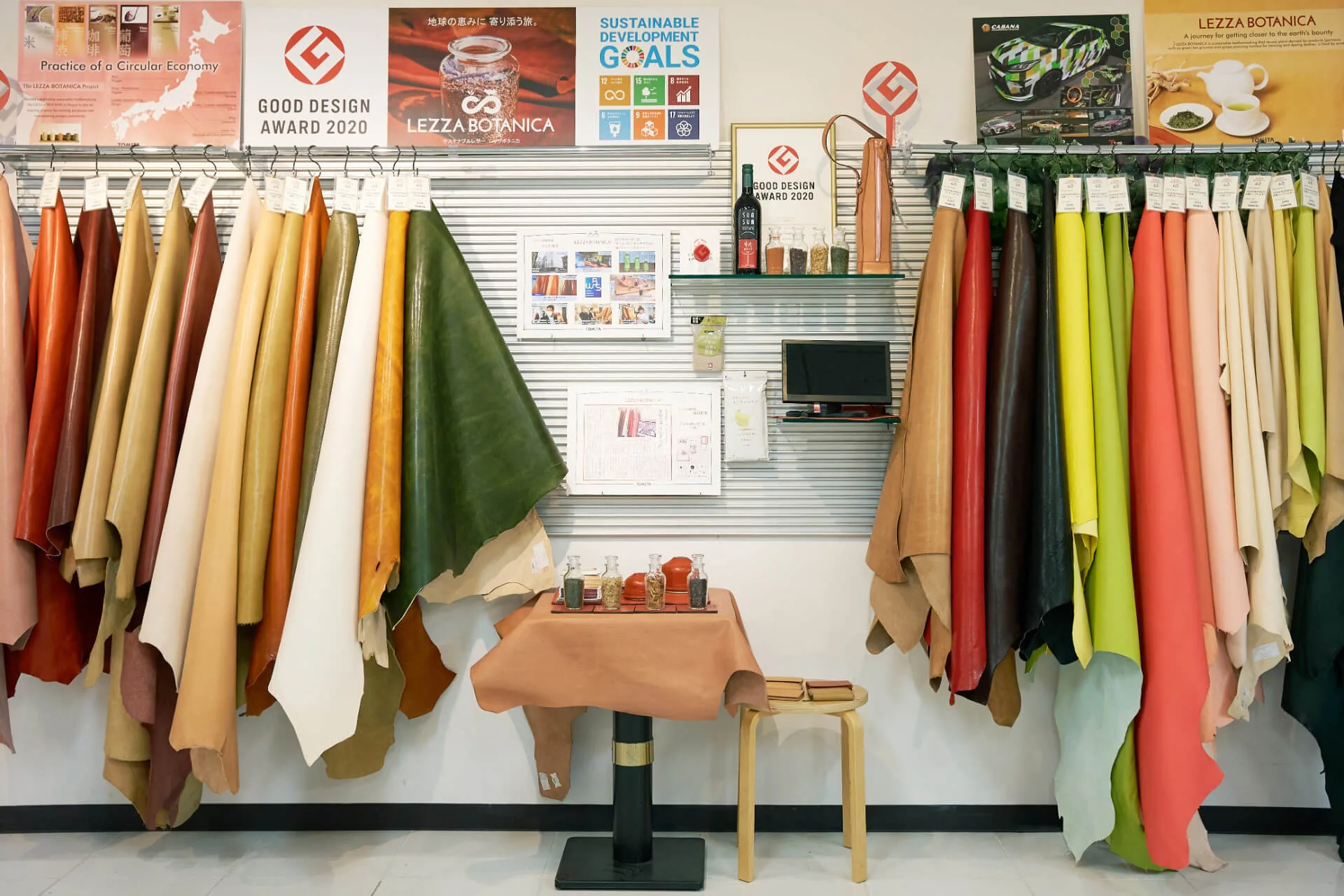
“LEZZA BOTANICA ®,” the company's own approach to leather-making, reuses hides—a by-product of food—together with pomace (pressing residue), a plant-derived by-product. For it, the company collaborated with beverage maker ITO EN, using the catechins contained in used tea leaves to tan the hides. The result is leather with beautiful color and rich texture.
Recognized as “design oriented toward a sustainable circular economy” in place of conventional consumption, it won the 2020 Good Design Award—a first for a leather-centered project. The antibacterial effect of polyphenols and catechins suits the with-COVID and post-COVID era. Leather tanned with wine pomace and used tea leaves is selling well, and ideas involving coffee, persimmon tannin, apples, and more are in the works.
LEZZA RESILIENCE PROJECT — turning D-grade leather into “life stock”
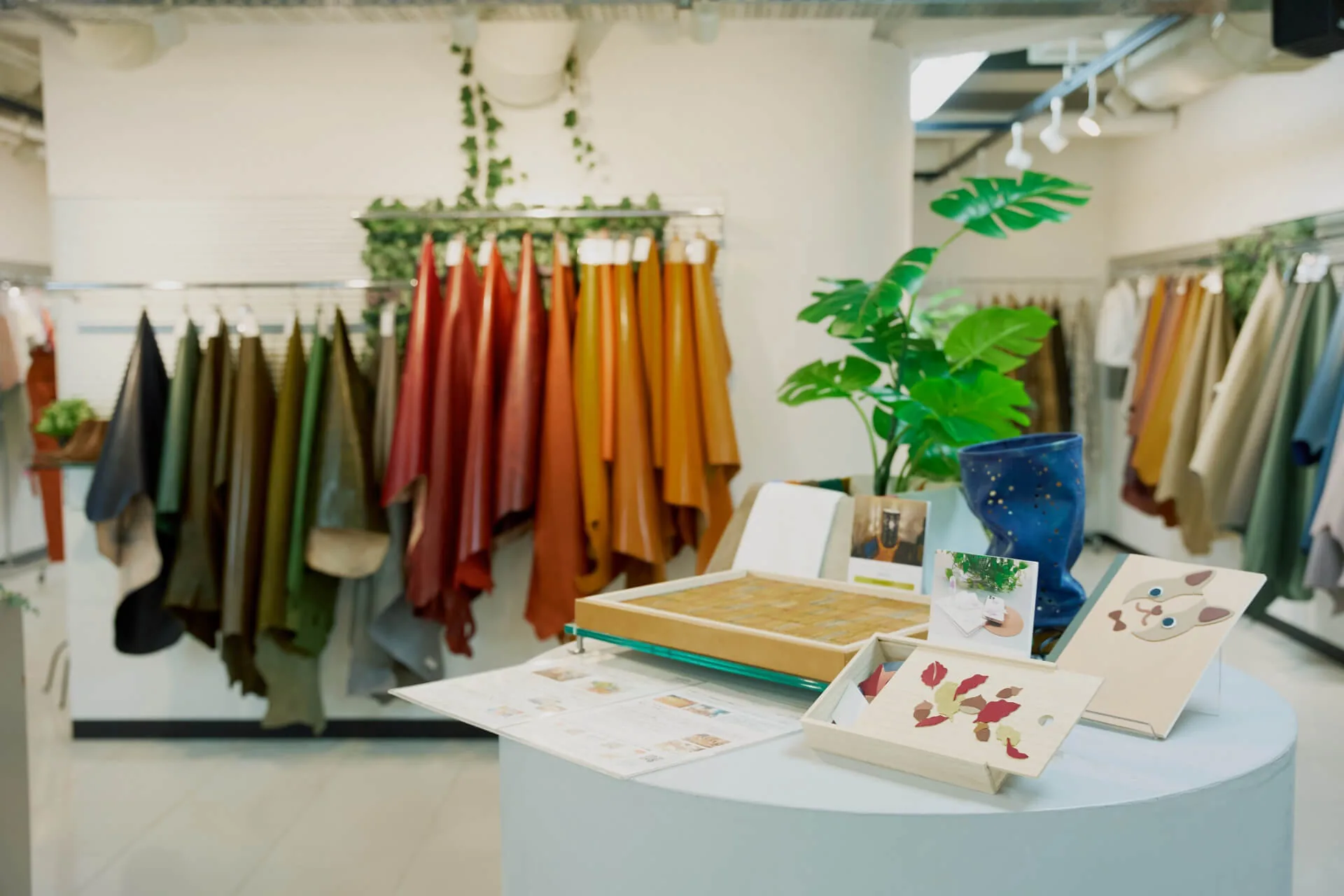
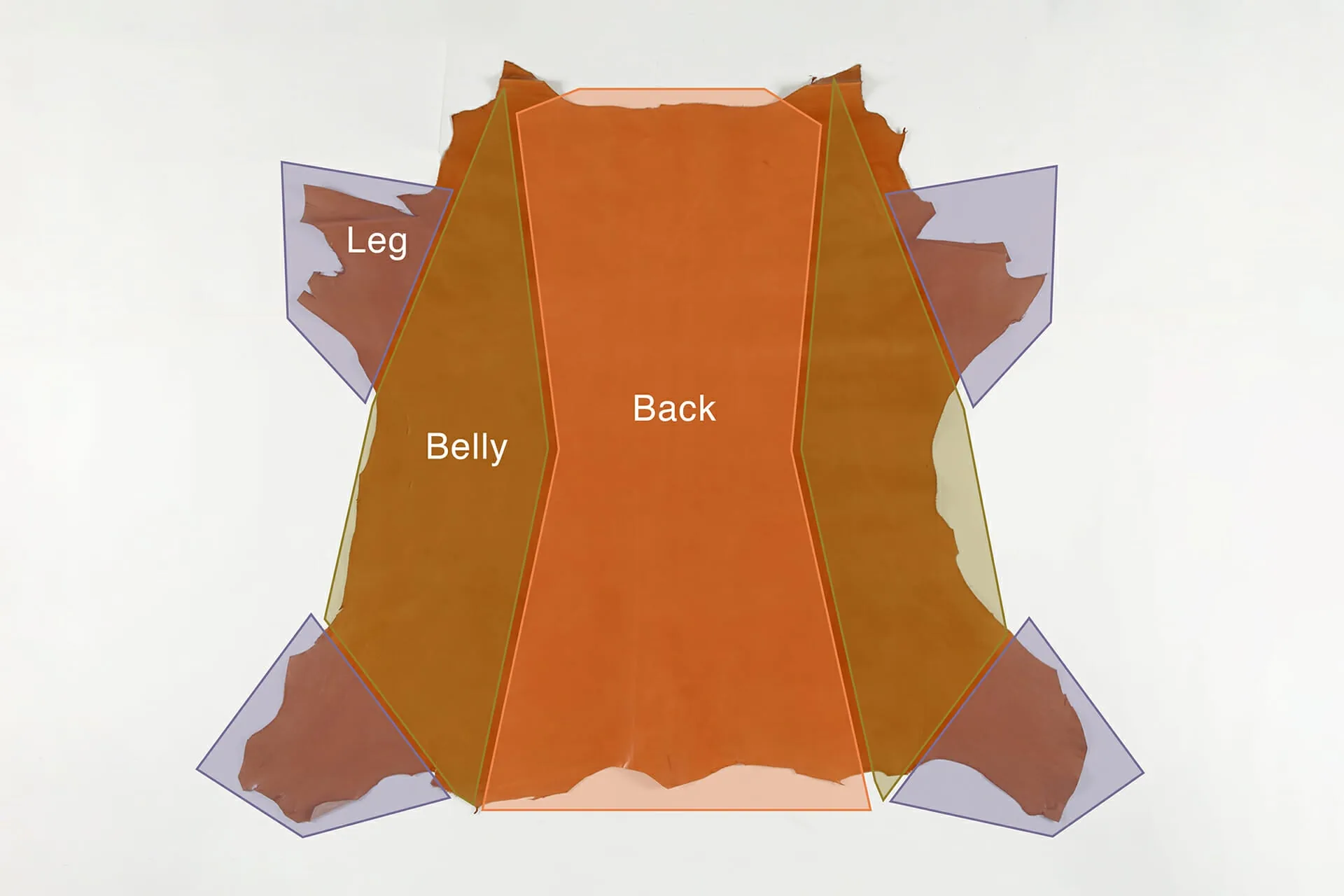
Next came the launch of the “LEZZA RESILIENCE PROJECT.” In an industry–academia collaboration with the Professional Institute of International Fashion, which trains fashion-business professionals, the project set out to tackle resource loss in the leather industry by focusing on “D-grade leather,” a grade considered unsuitable for products. Making the most of each hide's individual character—scars, insect bites, and the like—it elevated “dead stock” into “life stock.” The students' fresh sensibilities gave form to a wide range of ideas.
One of these, “Ushi-san no Tsume Salon” (a cowhide scratching post for cats), won the Student Division Grand Prize at the 2022 Japan Leather Award, the country's largest leather-product competition. With staying at home now part of everyday life, it looks set to win growing support as a new category of Japan leather.
Game leather and domestic pigskin
Attention is also turning to the company's handling of game leather—such as Ezo deer culled to reduce damage to agriculture and forestry—and to pigskin. Pigskin produced in Sumida-ku, Tokyo holds the top share in Japan, one of the few materials the country can supply domestically. The techniques handed down and honed by the makers of the Sumida area are outstanding too. It enjoys enduring popularity in Europe and has in the past been adopted by major fashion houses.
Attitudes and tastes around food are diversifying, but we have a history of eating meat, and we have continued making leather without letting the by-products of the meat industry go to waste. We feel that further dialogue is needed so that this is more widely understood. Going forward, we want to keep fulfilling our role of making use of resources and of circular manufacturing, and to help solve environmental problems.
— Tsuneichi Tomita, President and Representative Director
The company keeps proposing new materials for enjoying a lifestyle with leather, along with ideas for sharing it. Its challenges show no sign of stopping.