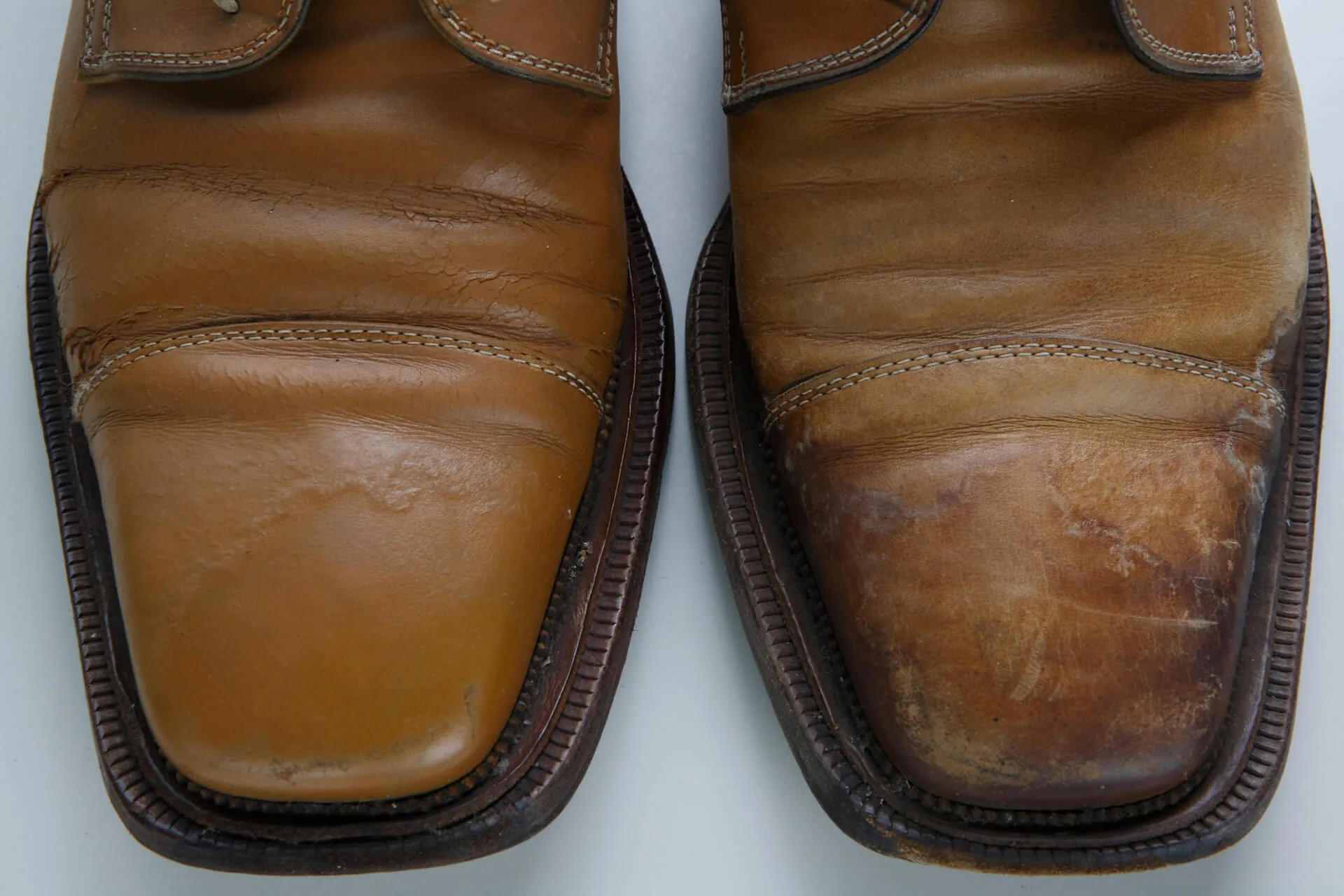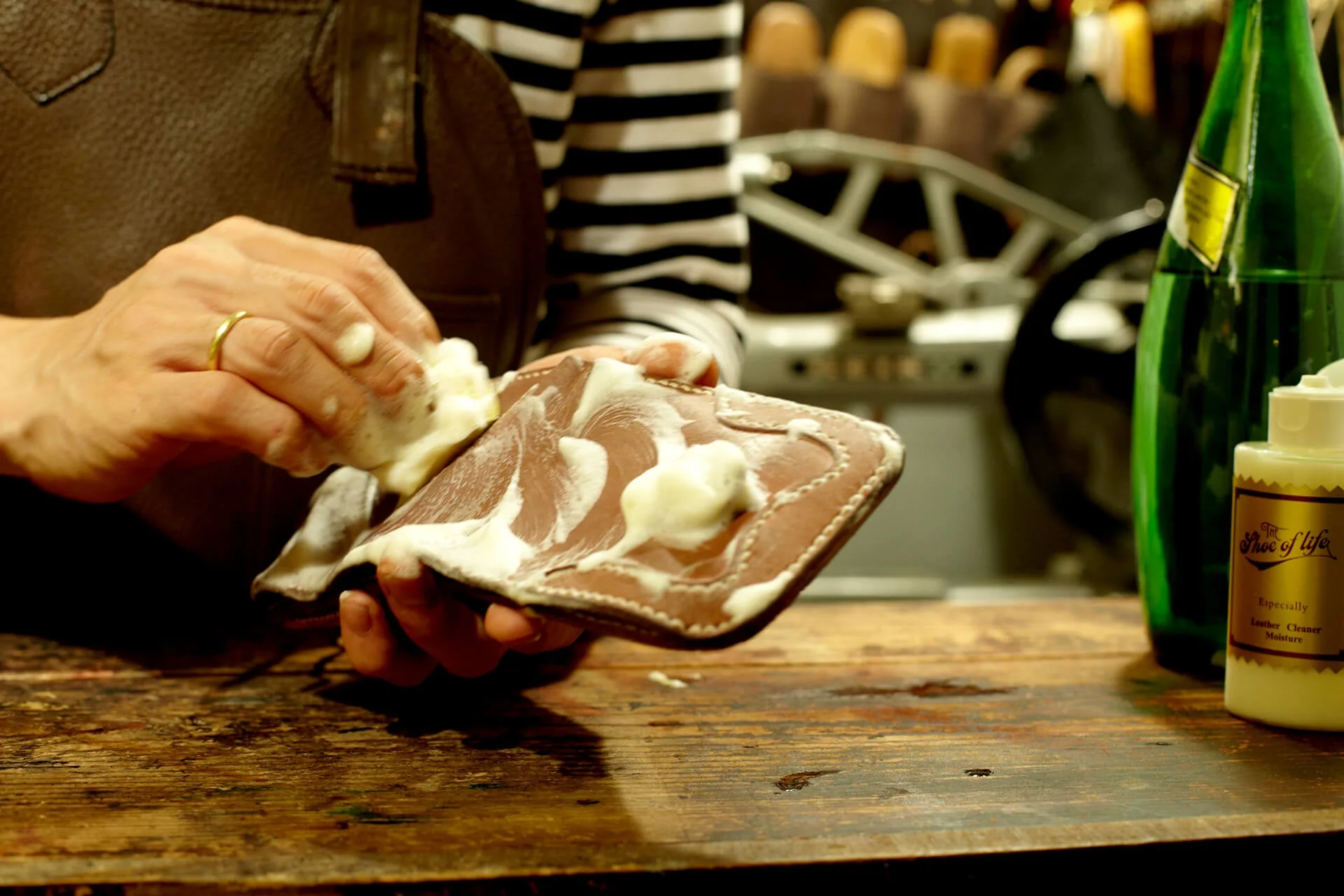
1. Remove dirt
Brush off dust and mud from the shoes. Ideally use a shoe brush made of pig or horse hair, and take care not to damage the leather with the edge of the brush. If dirt is hard to remove, use a cleaner.




Are you polishing your shoes properly?
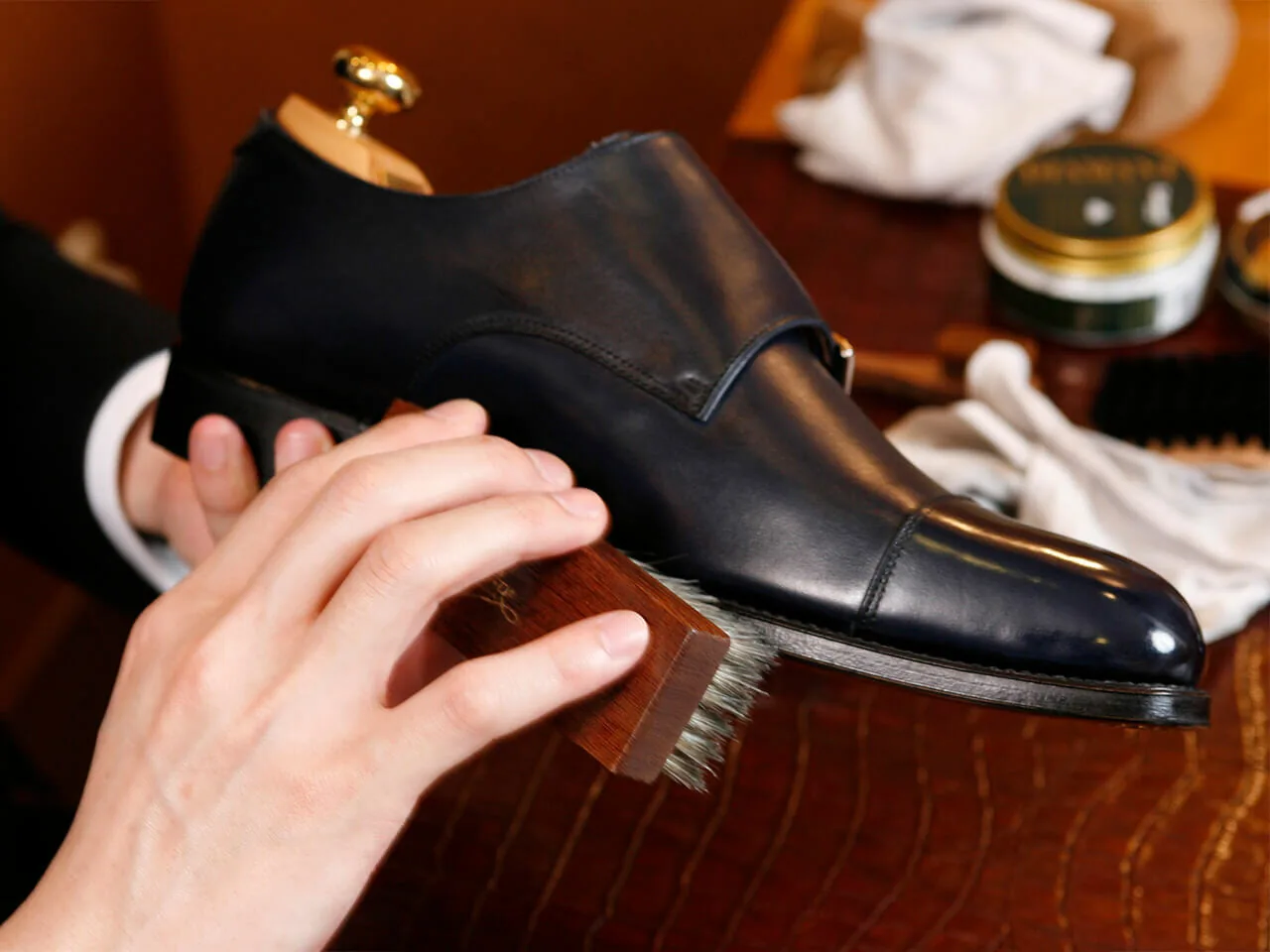
Brush off dust and mud from the shoes. Ideally use a shoe brush made of pig or horse hair, and take care not to damage the leather with the edge of the brush. If dirt is hard to remove, use a cleaner.
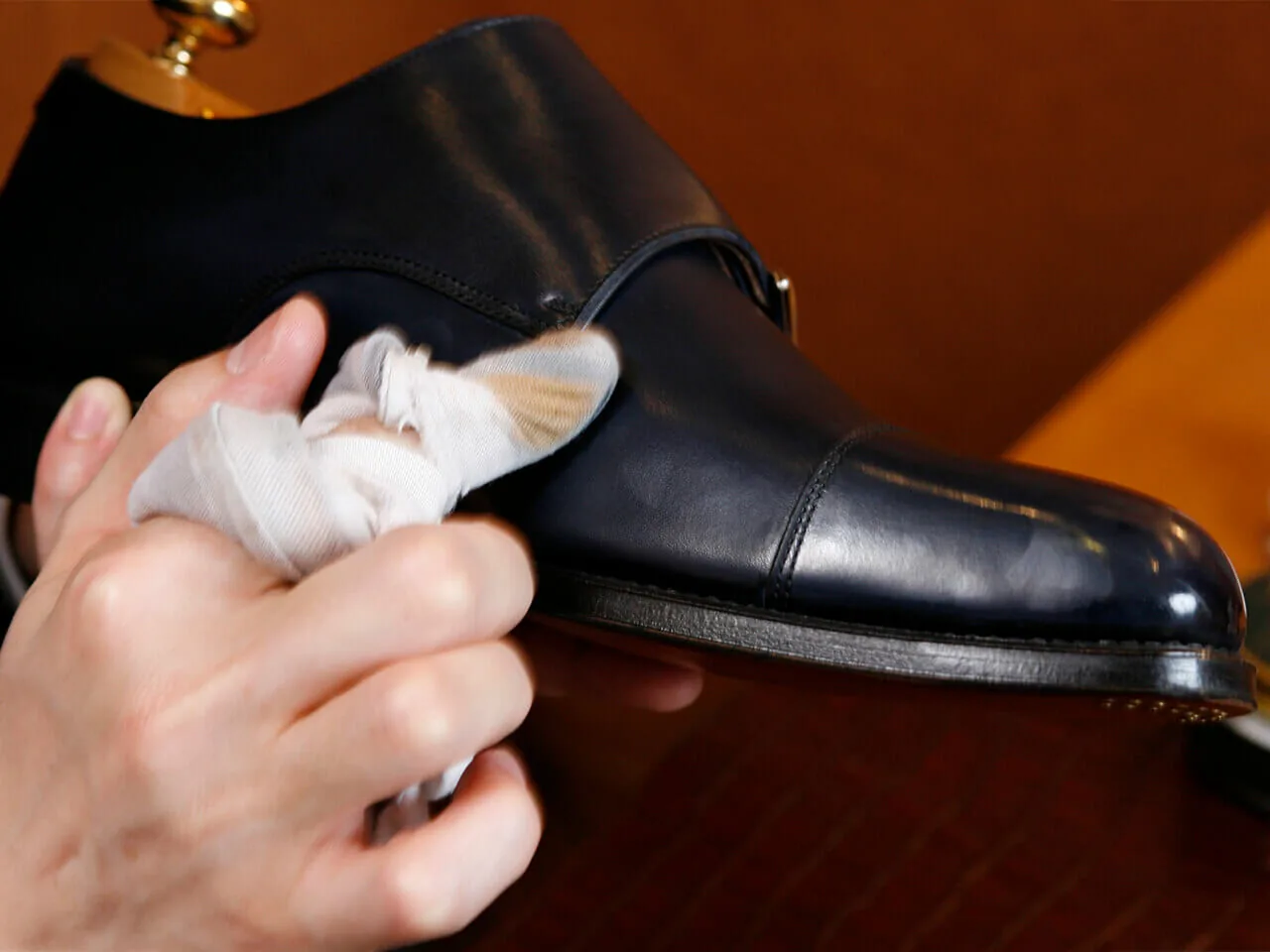
Insert shoe trees to smooth out creases so the cream can be applied evenly all over. Using a cloth, apply an emulsified cream to the entire shoe. Work in small circles, taking care to spread it thinly and evenly.
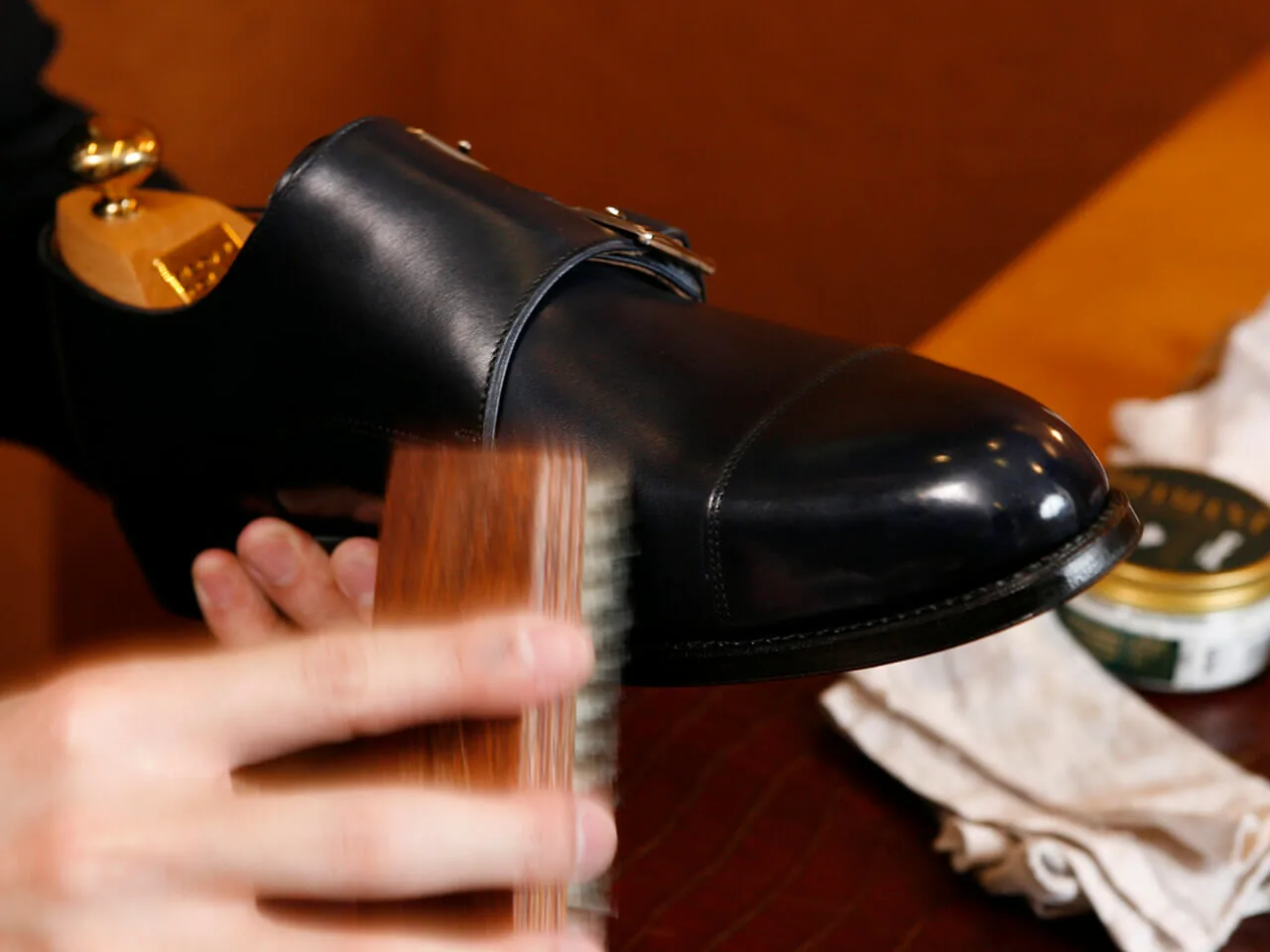
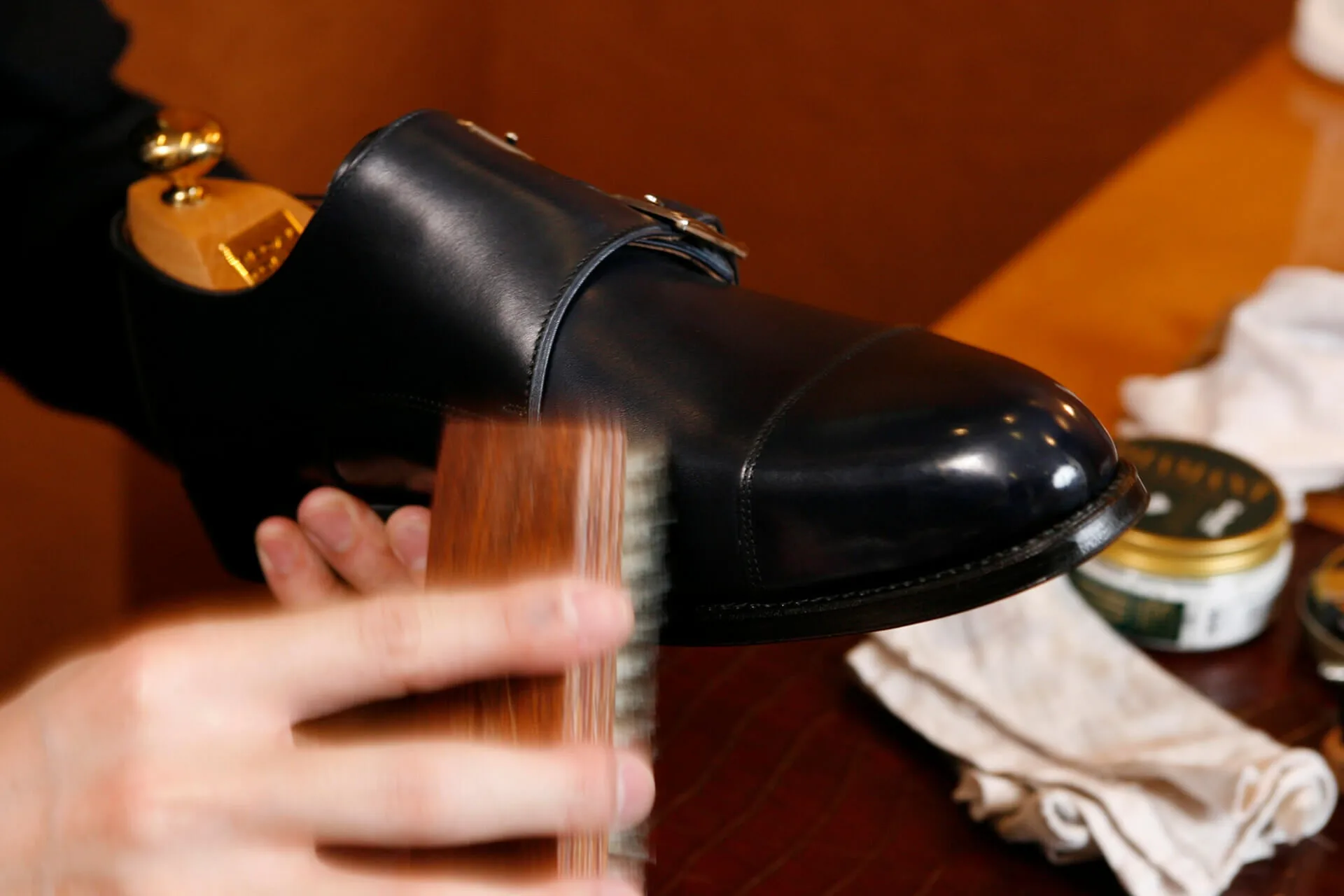
Brush the shoes before dry wiping. This removes excess cream and spreads what you've applied, enhancing the shine. Ideally use shoe-only brushes, keeping separate ones for each cream color.
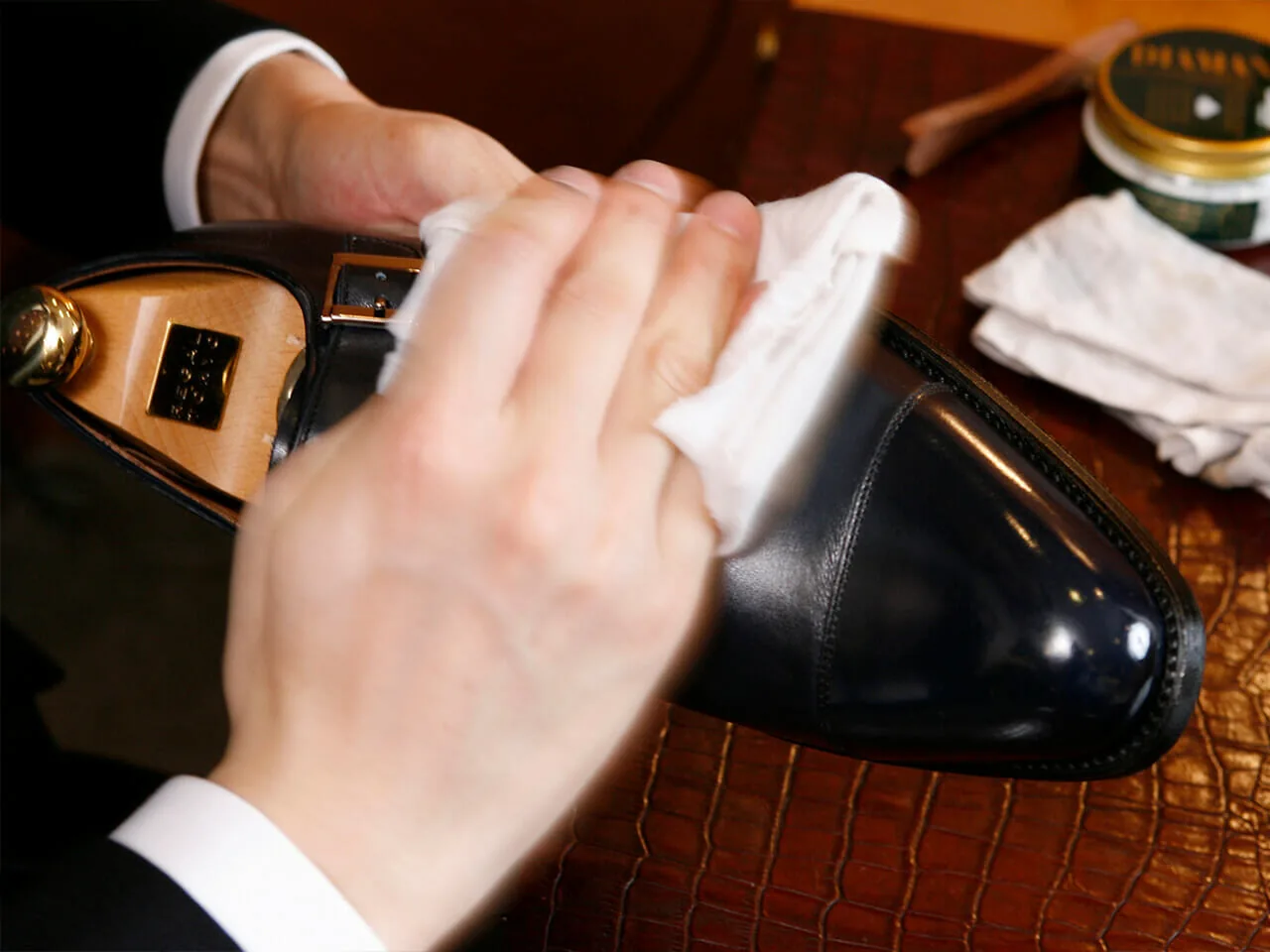
Wipe the whole shoe with a clean, dry cloth. Moving the cloth briskly warms the leather and melts the cream, bringing out even more shine.
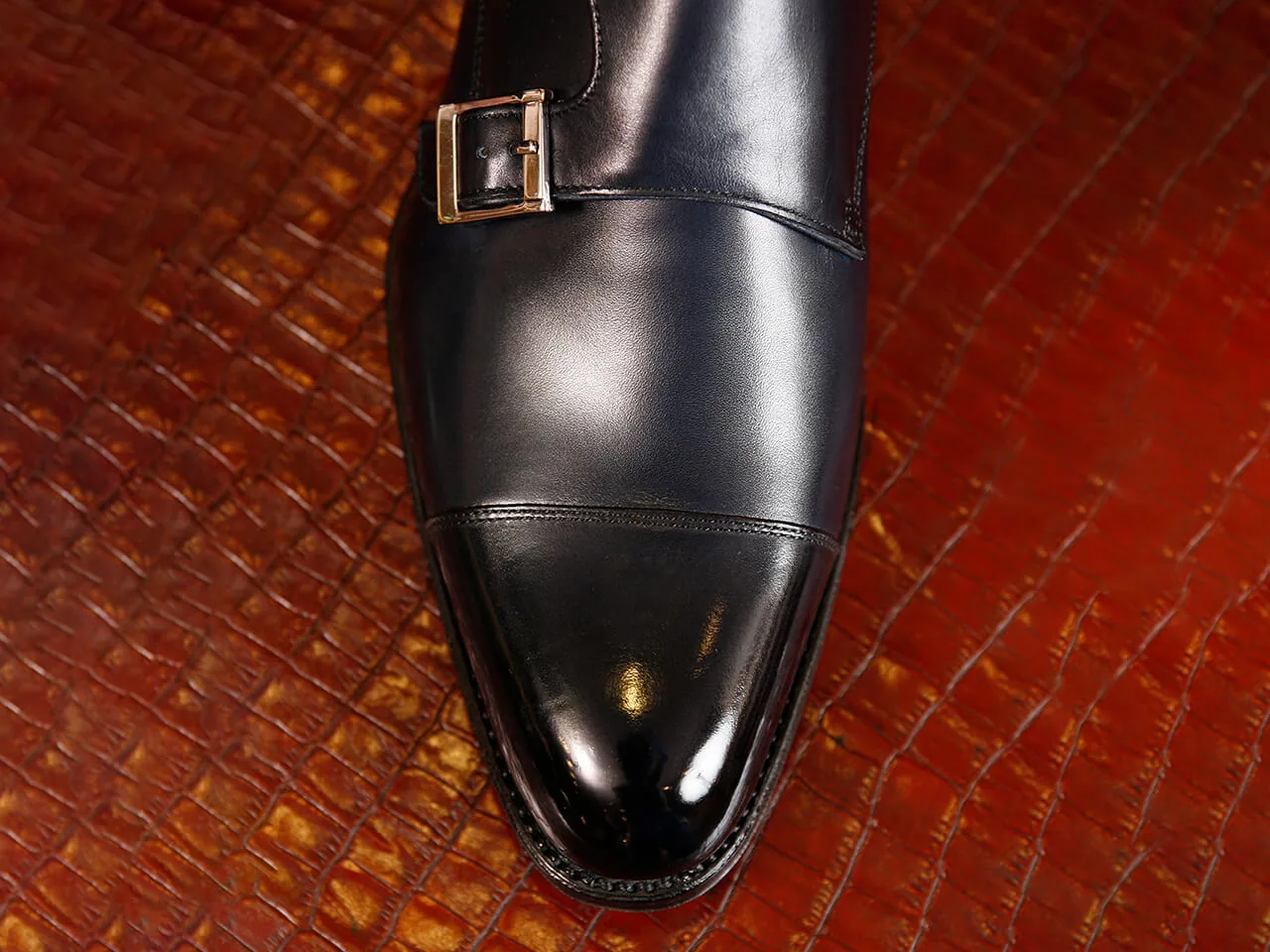
Basic care ends with Step 4. If you want to go further, give the toes a mirror shine. Apply an oil-based shoe polish and buff it so that it fills in the unevenness of the surface.
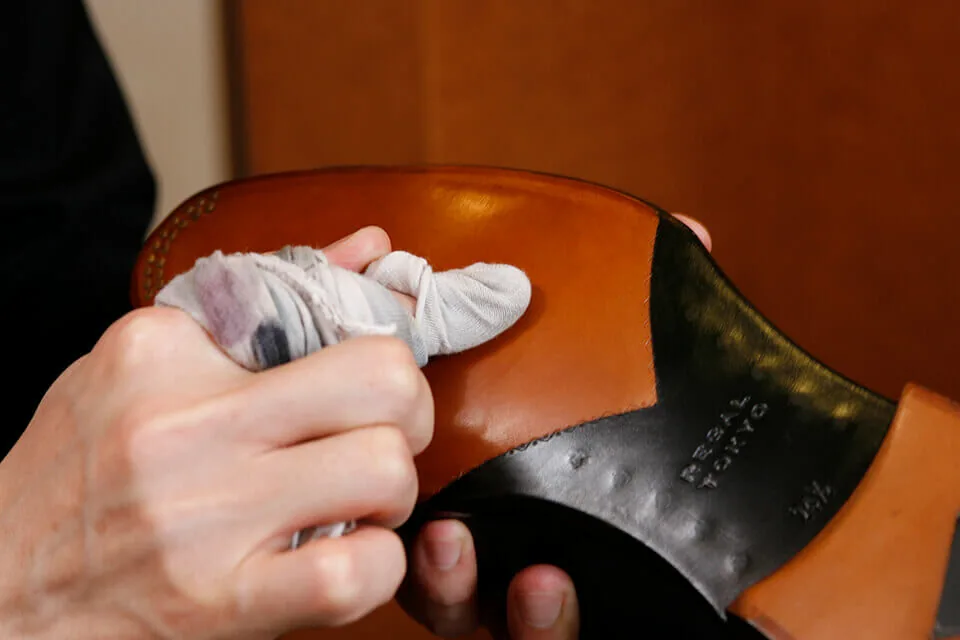
Clean the leather soles with a stiff brush as well, and apply mink oil to condition the leather.
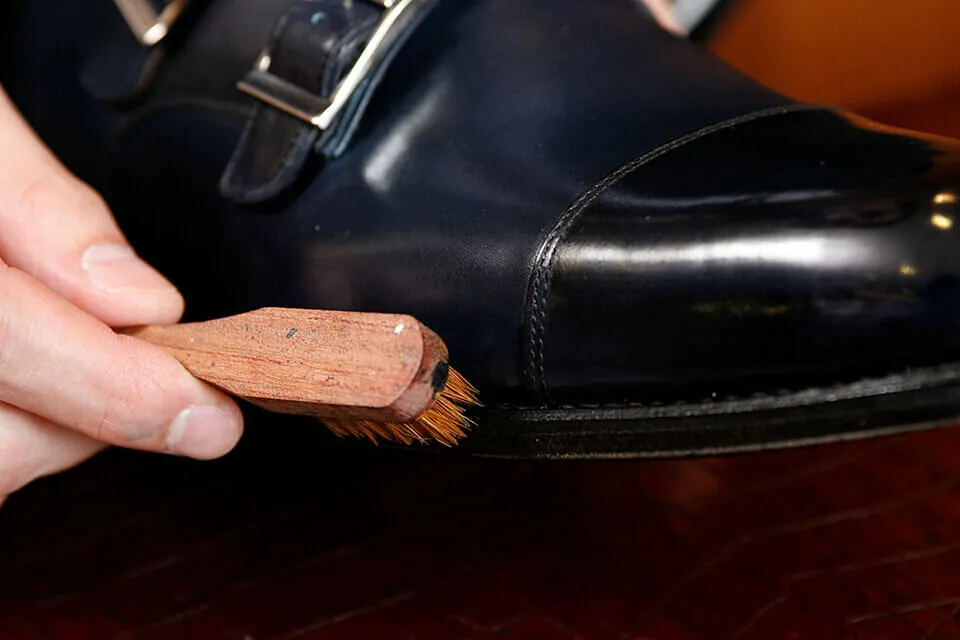
Clean the edge between the sole and the upper with a dedicated edge brush, then work in emulsified cream.
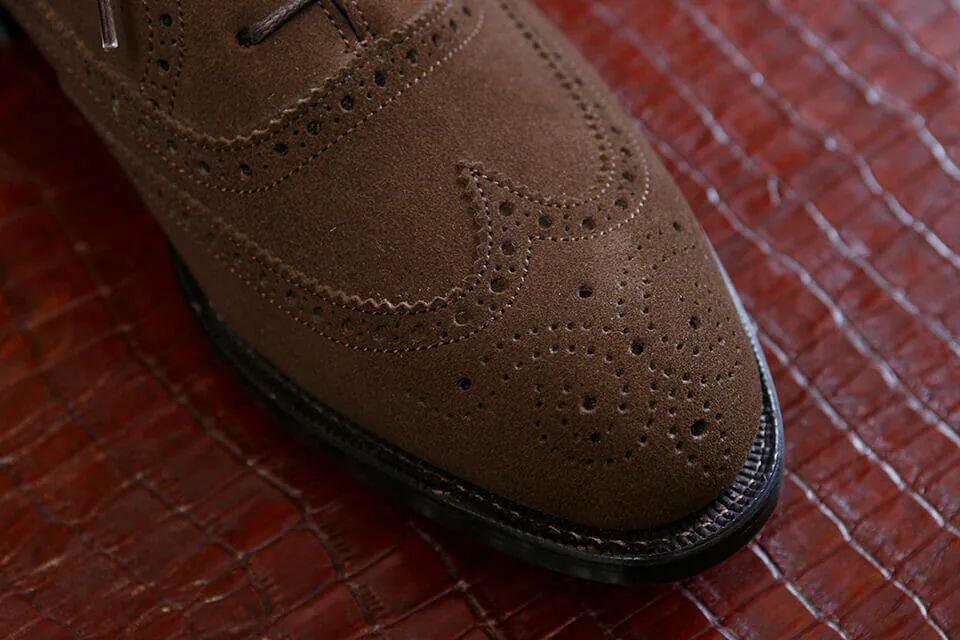
For suede, brushing is the basic care. Remove heavy dirt with a dedicated rubber eraser, and apply water-repellent and color-restoring sprays as needed.
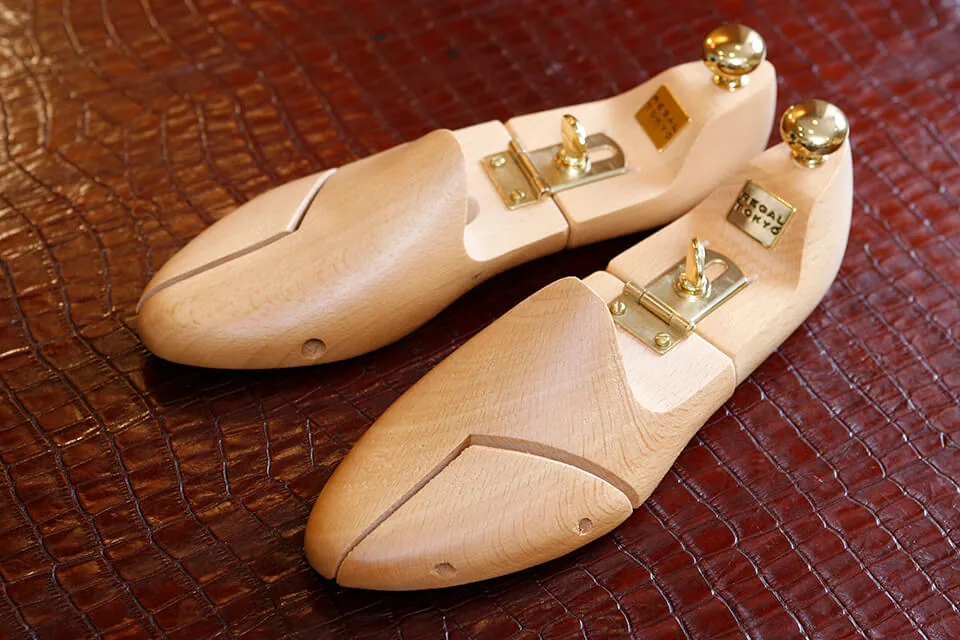
Shoes worn for a full day absorb a lot of moisture. Insert shoe trees after wearing to prevent them from losing shape, absorb moisture, and keep the shoes in steady condition.