Here are the basics of storage and of dealing with mold, water, heat, and sunlight that anyone who wants to enjoy their leather goods for years should know. Drawing on test results, we explain the nature of leather and how to live with it.
Q. Does leather grow mold easily?
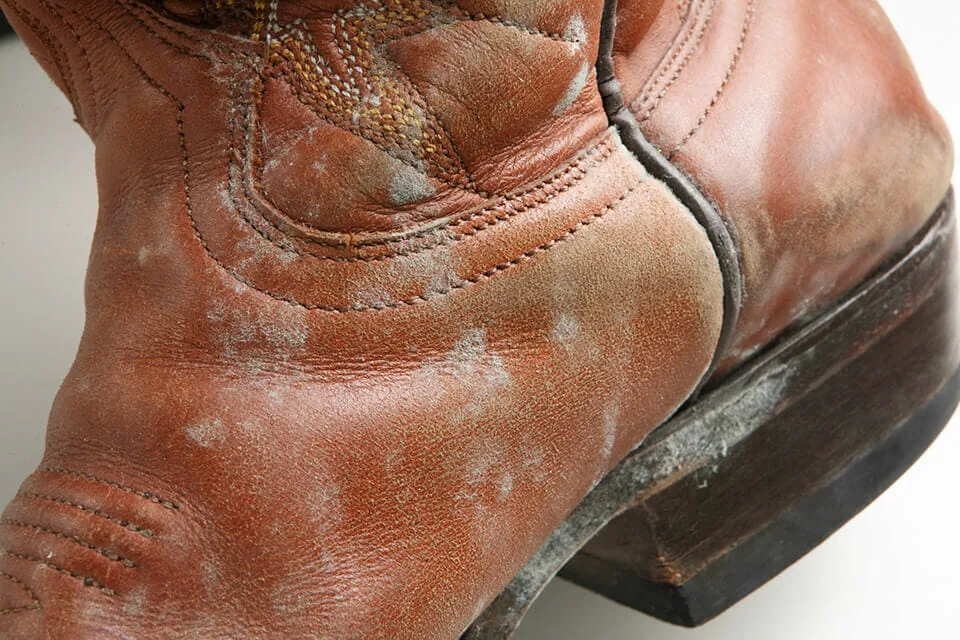
Leather, a fibrous material containing a fair amount of moisture and oils, offers ideal conditions for mold to grow. A moment's carelessness and mold appears with ease. Most troublesome is mold that has worked its way into the leather's structure; once that happens, there is little to be done. Always keep leather goods somewhere with good ventilation. And never reuse a shoebox in which mold has grown.
If the mold is only on the surface, wiping it with a damp, well-wrung cloth and drying the item in the shade will remove it to a fair extent.
Q. Is leather vulnerable to rain?
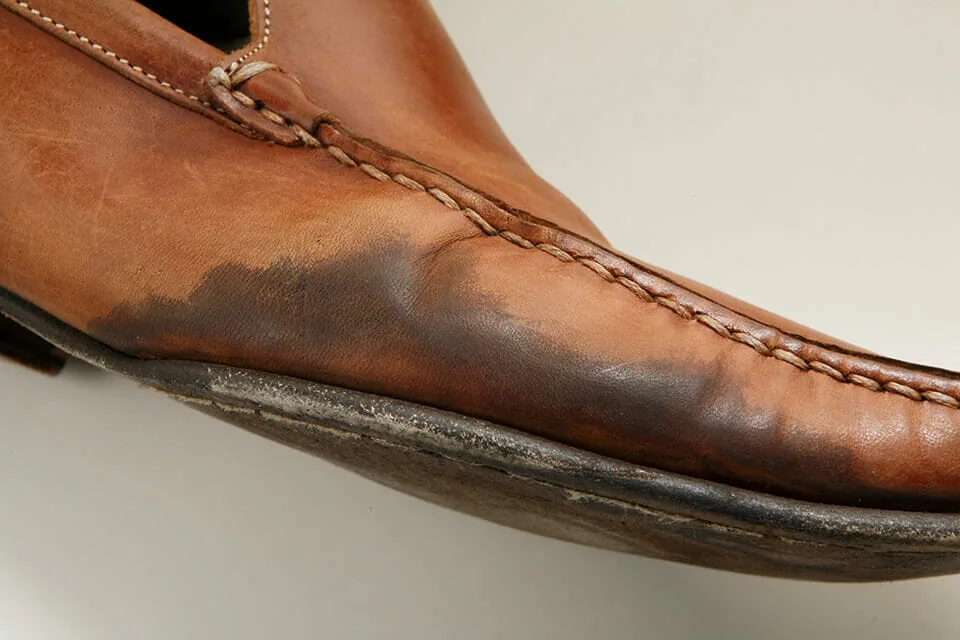
By nature, leather is fibrous and absorbs water very readily. Some leathers are water-resistant thanks to their dyeing or finishing methods, but as a rule leather should be regarded as vulnerable to water. When it absorbs moisture, its structure changes, and this leaves a mark. Add heat, and it may even shrink and harden. So if water droplets land on leather, blot them off immediately.
An experiment with an iron
Wet leather becomes vulnerable to heat. Take care: trying to dry it quickly with an iron or the like will make it shrink and harden.
Q. Can water stains and mold marks be reversed?
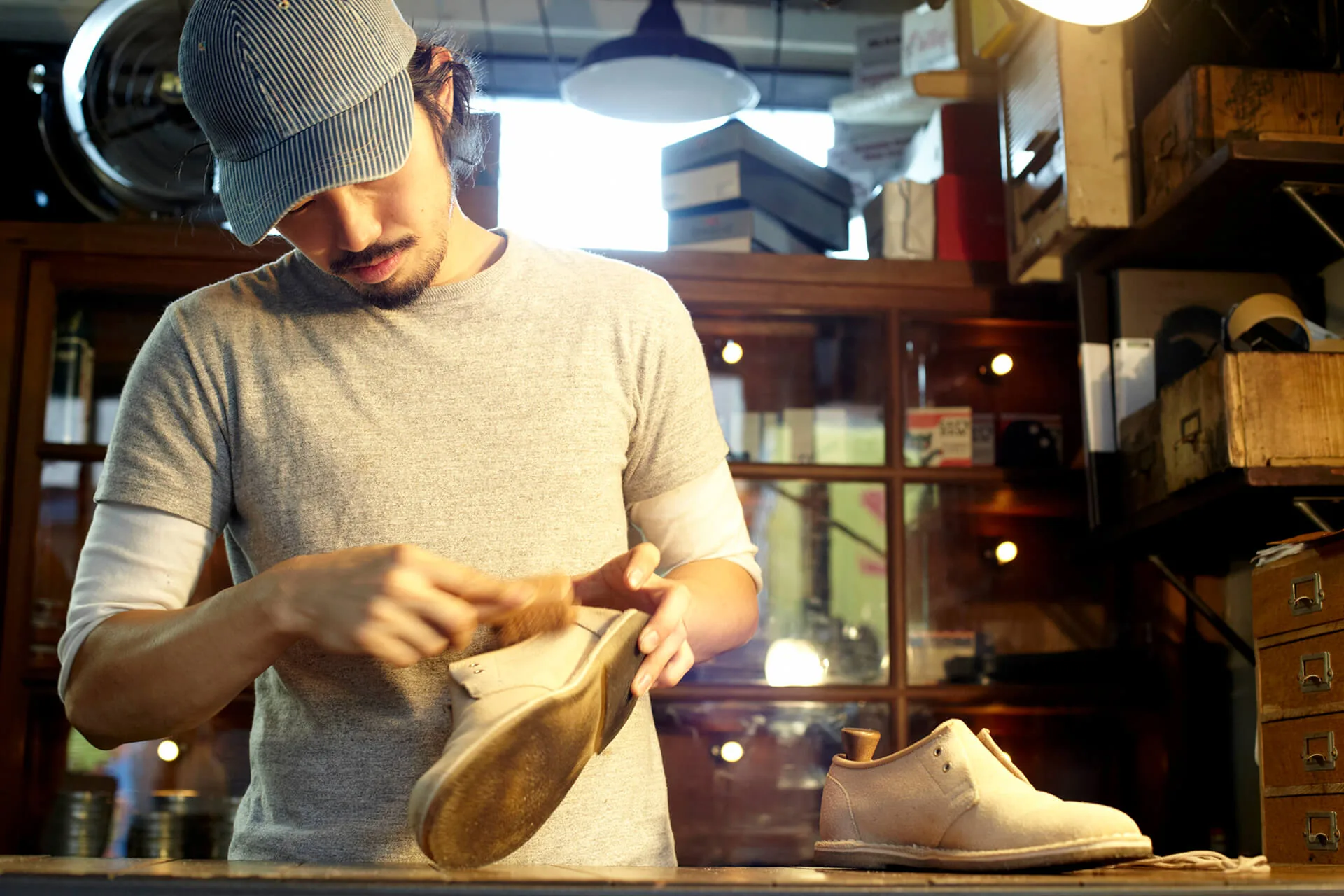
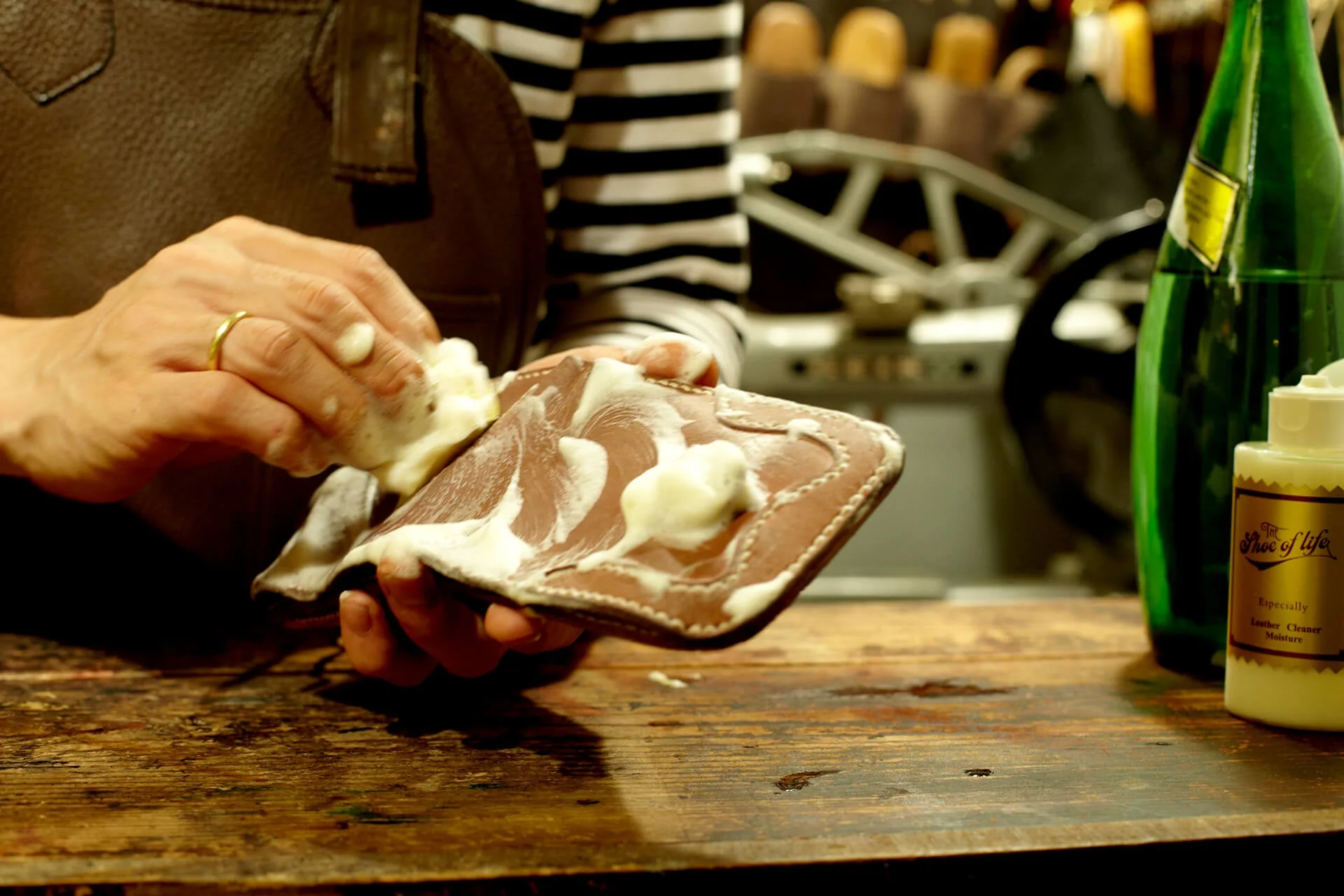
Dirt and water stains are inevitable with use, and mold can appear before you notice it. These can be refreshed by a cleaner specializing in leather. Such businesses wash with special detergents, dry the items carefully, and repair them. Washing leather the same way at home is quite difficult, so it is wise to leave the laundering of leather goods to the professionals.
The shoe-cleaning process
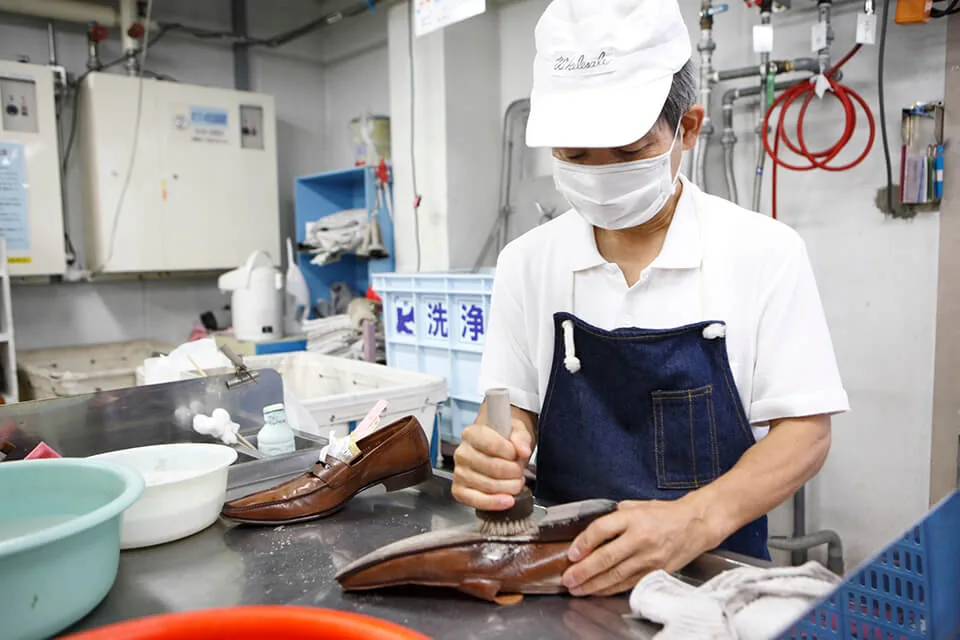
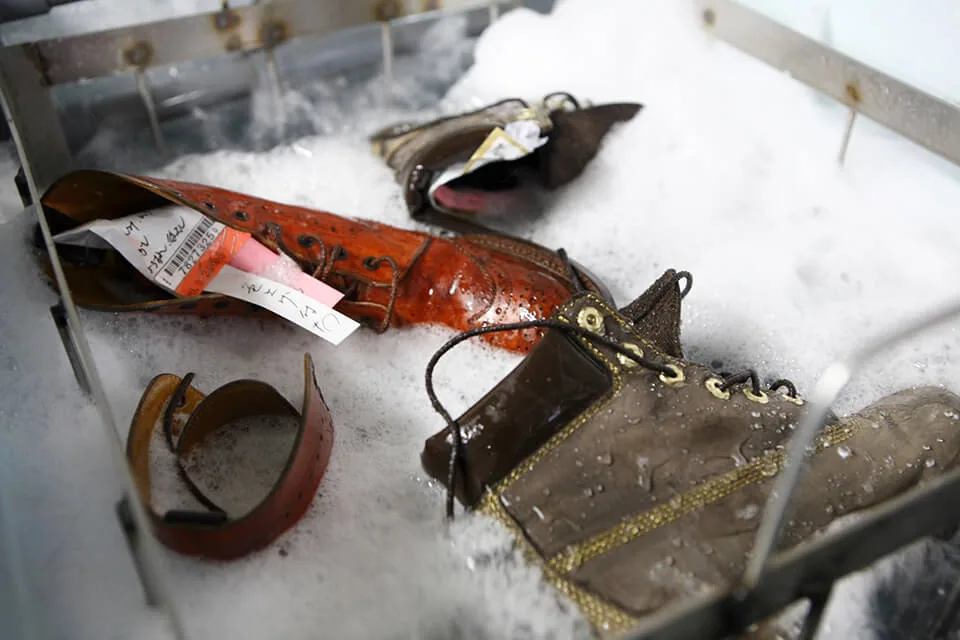
The photos show the shoe-cleaning process. Before soaking in detergent, dirt stuck to the soles is loosened with a stiff brush.
The shoes are washed with a special water-soluble detergent. Soaked in a detergent tank, they are hit with a water jet to remove dirt, and the detergent solution is changed five times in all.
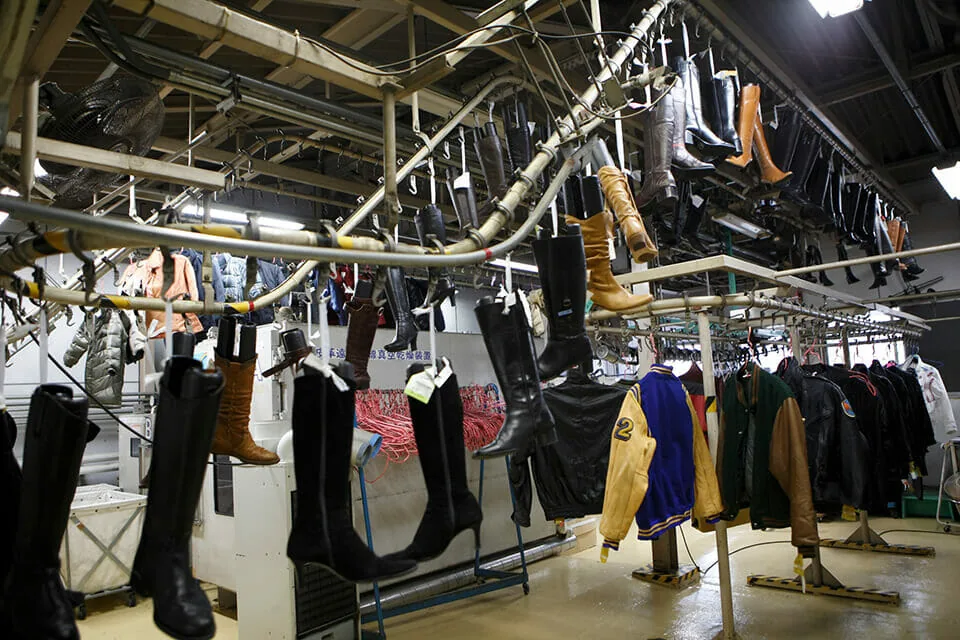
After rinsing with ozonated water, the shoes are air-dried for at least 24 hours with a fan. Dedicated shoe keepers are inserted to keep them in shape.
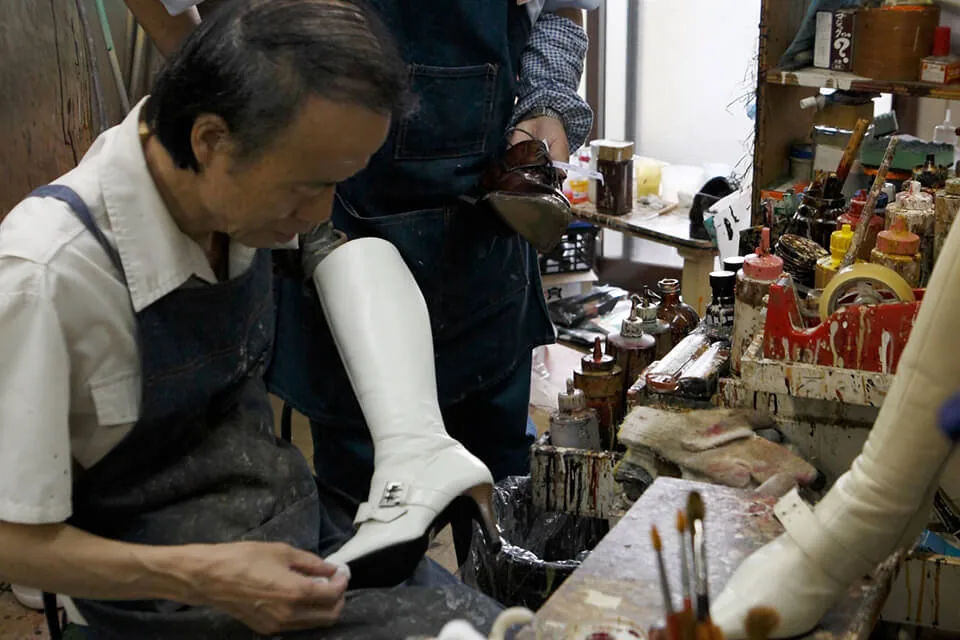
Areas that have faded or developed water stains are recolored with pigment mixed to match the original color.
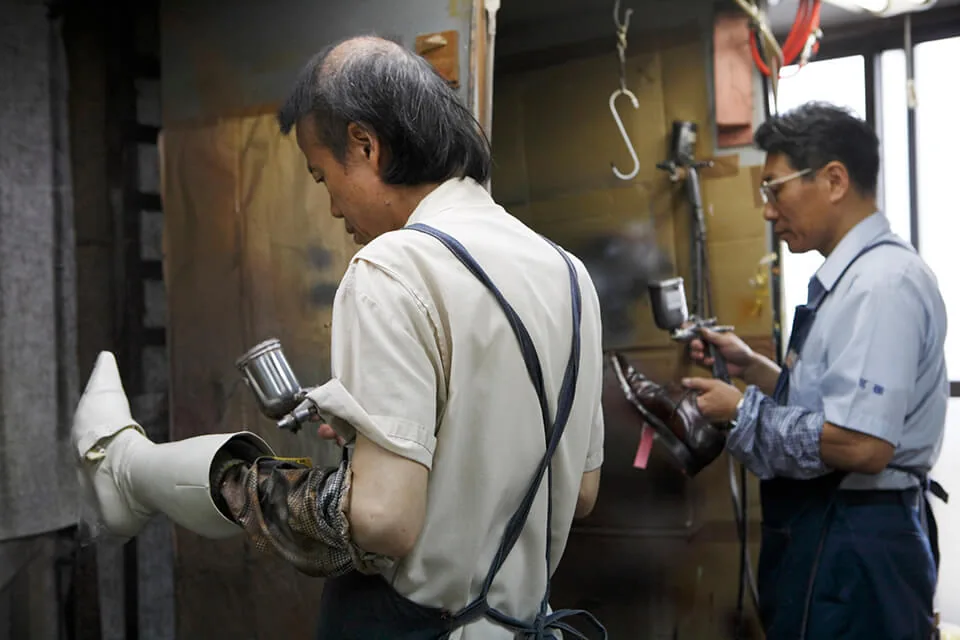
The mixed pigment is applied with a spray gun. Reproducing the original color for a natural finish is a true craftsman's skill.
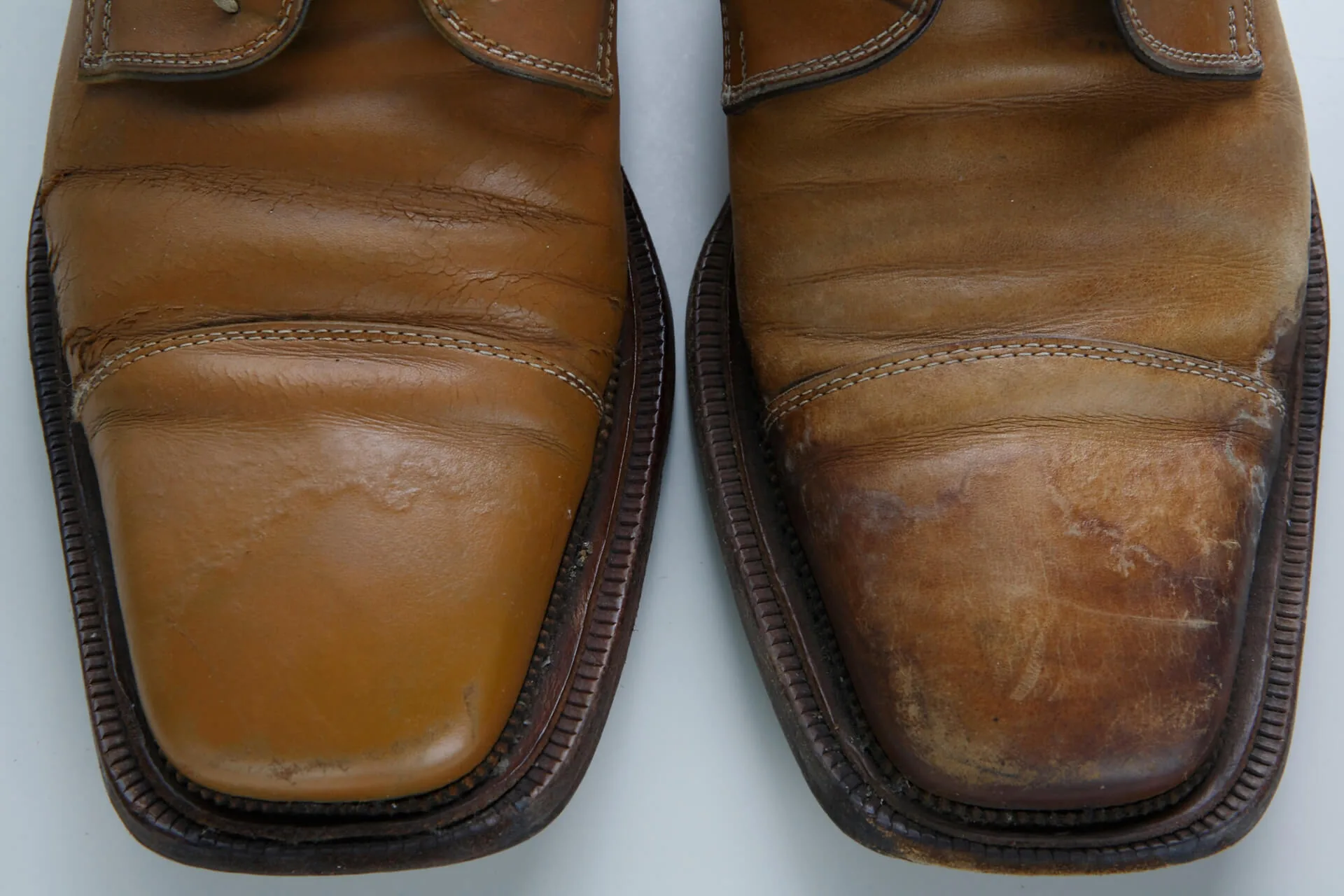
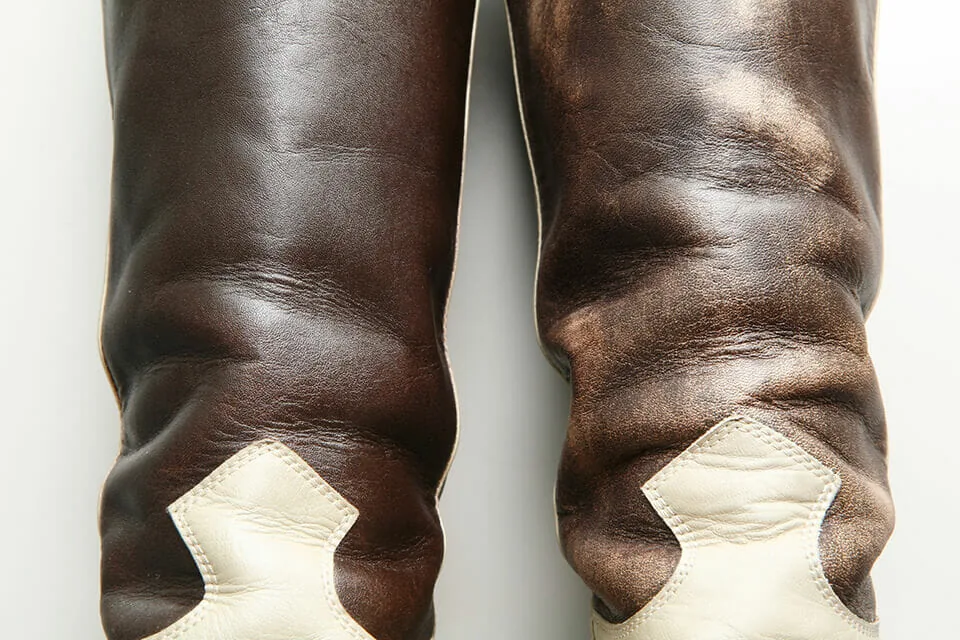
Before cleaning (right) and after (left). Not only has the dirt been removed; areas discolored by sun fading or water stains have been recolored for a natural finish in which they are barely noticeable.
Q. How should leather be stored properly?
The cardinal rule for storing leather goods, whether shoes, bags, or clothing, is to keep them somewhere as well ventilated as possible. Japan's hot, humid climate is hard on leather, so ideally the environment should be low in both temperature and humidity. If you store items in a closet or cupboard, place them in the middle where air does not stagnate, and take them out once a month to air in the shade.
The basics of storing leather goods are to avoid heat and humidity and to ensure ventilation. Tokyo Wholesale offers a service that, for an extra ¥500 on top of the cleaning fee, keeps coats and boots from spring through autumn in a storage vault at 10–15°C and 55% humidity.
Q. Does leather stretch easily?
How much leather stretches varies greatly with the animal's species, age, and sex, the part of the hide, and the direction in which the piece is cut. Generally, the belly stretches more than the back, and on the back itself, the leather stretches more across the spine (backbone line) than along it. Leather goods are therefore cut with the position and direction best suited to the product in mind. Even so, storing an item under strain can cause it to stretch, so take care.
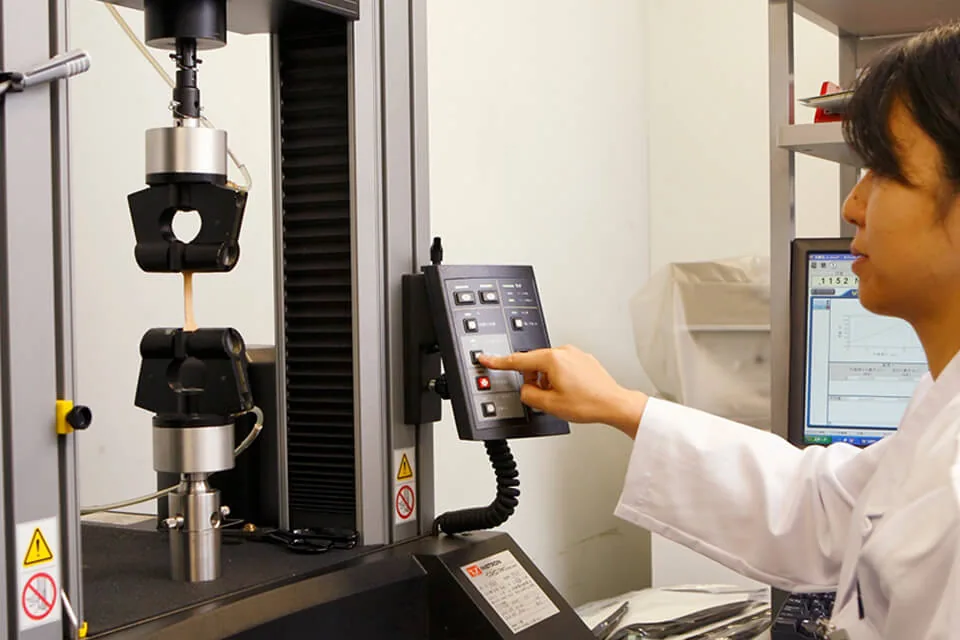
Tensile strength and elongation
We ran an experiment in which pieces of leather were stretched mechanically. Test pieces were taken from pigskin at different parts and in different directions and compared; all eventually tore when pulled with great force. Among the parts, the softer belly stretched further before tearing than the back, and on the back, pieces cut perpendicular to the spine stretched further than those cut along it.
Q. Is leather resistant to heat?
When exposed to heat above its heat-resistance limit, leather hardens and deforms, and once deformed it never returns to its original state. The limit below which no deformation occurs is said to be around 120°C when dry. But this varies greatly with the leather's moisture content, and drops when the leather is wet. Depending on the tanning method, it shrinks sharply at around 60–100°C.
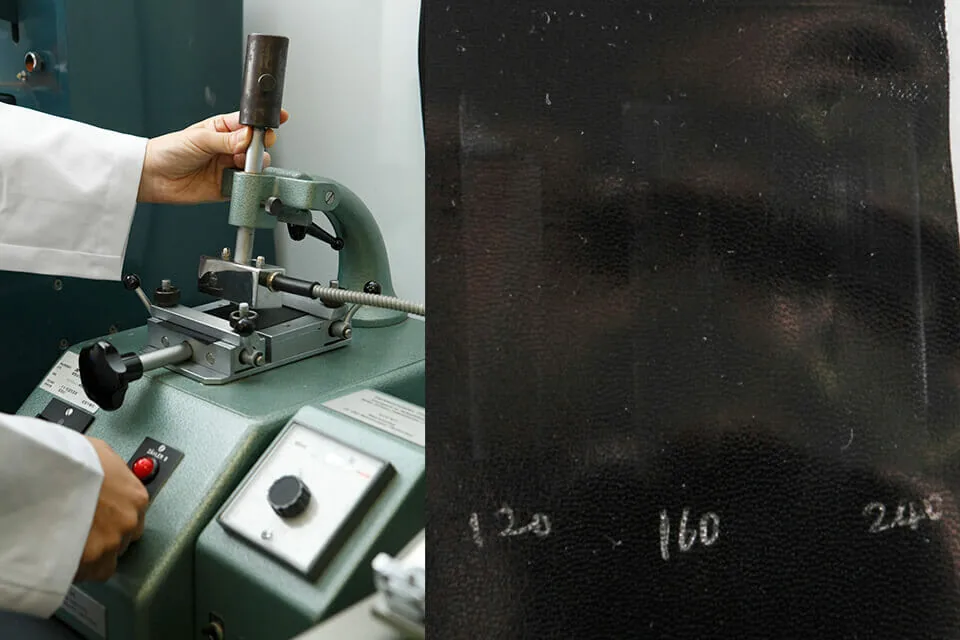
Iron test
Test pieces rubbed with an iron at, from left, 120°C, 160°C, and 240°C. As the temperature rose, the area touched by the iron became wavy. This is because the leather there stretched and hardened relative to the surrounding area, deforming into ripples. Once this happens, there is no going back.
Q. Does leather lose its color?
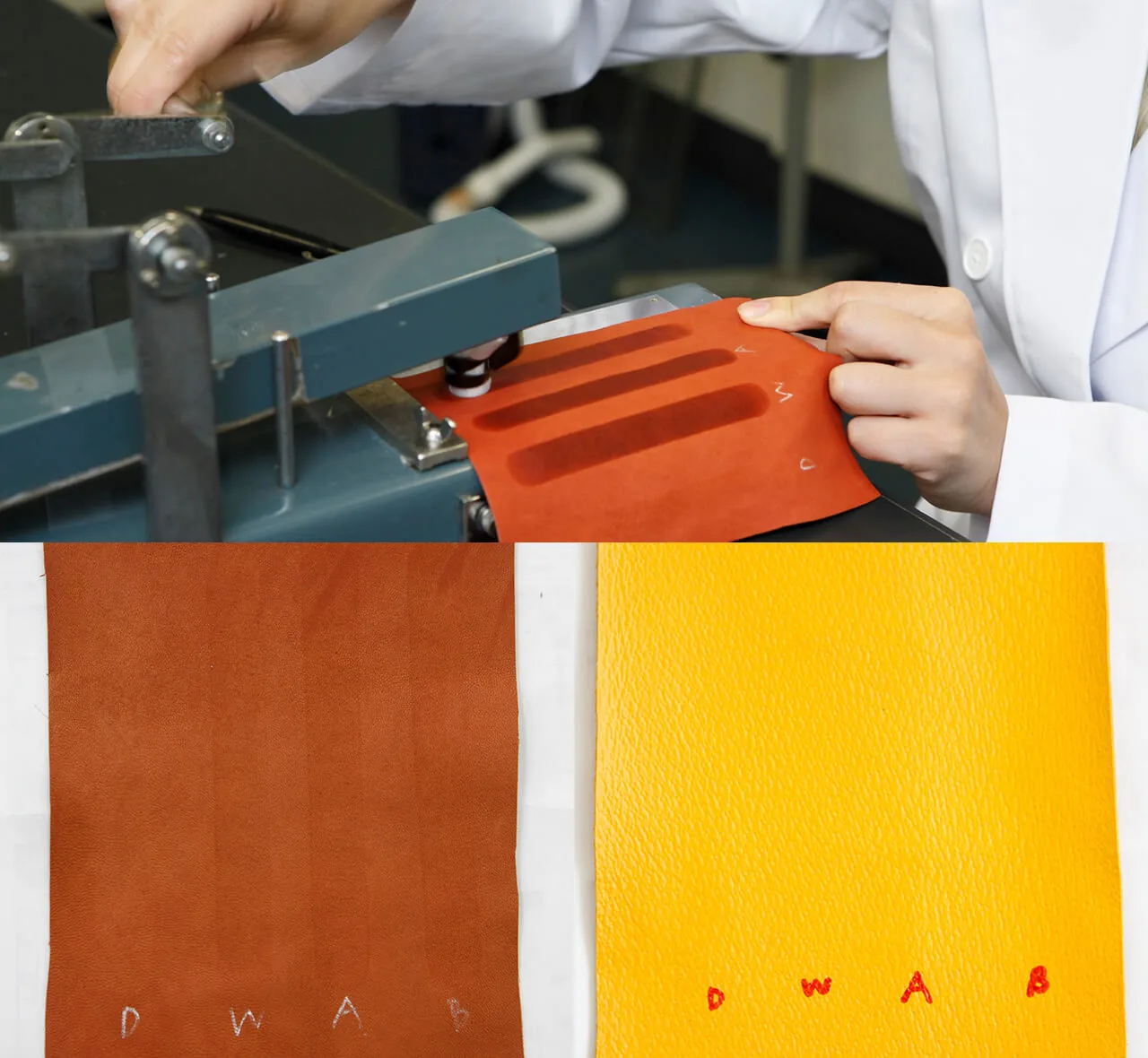
Leather can be colored by dyeing in a water bath, coating with a spray or brush, or printing, among other methods. How much color is lost depends on the type of dye and the finish, but as a rule, unfinished leather with no surface treatment, napped leather, and leather finished to bring out its natural character tend to lose color through rubbing and the like. Color loss is also often much worse when the leather gets wet, so take care.
Color fastness to rubbing
A white cotton cloth is fitted over a rubbing finger and rubbed against the surface of the leather test piece. Cloths were prepared dry, soaked in distilled water, and soaked in acidic and alkaline artificial sweat. Pigment-finished leather lost little color, but unfinished leather lost color with sweat.
Q. Does sunlight damage leather?
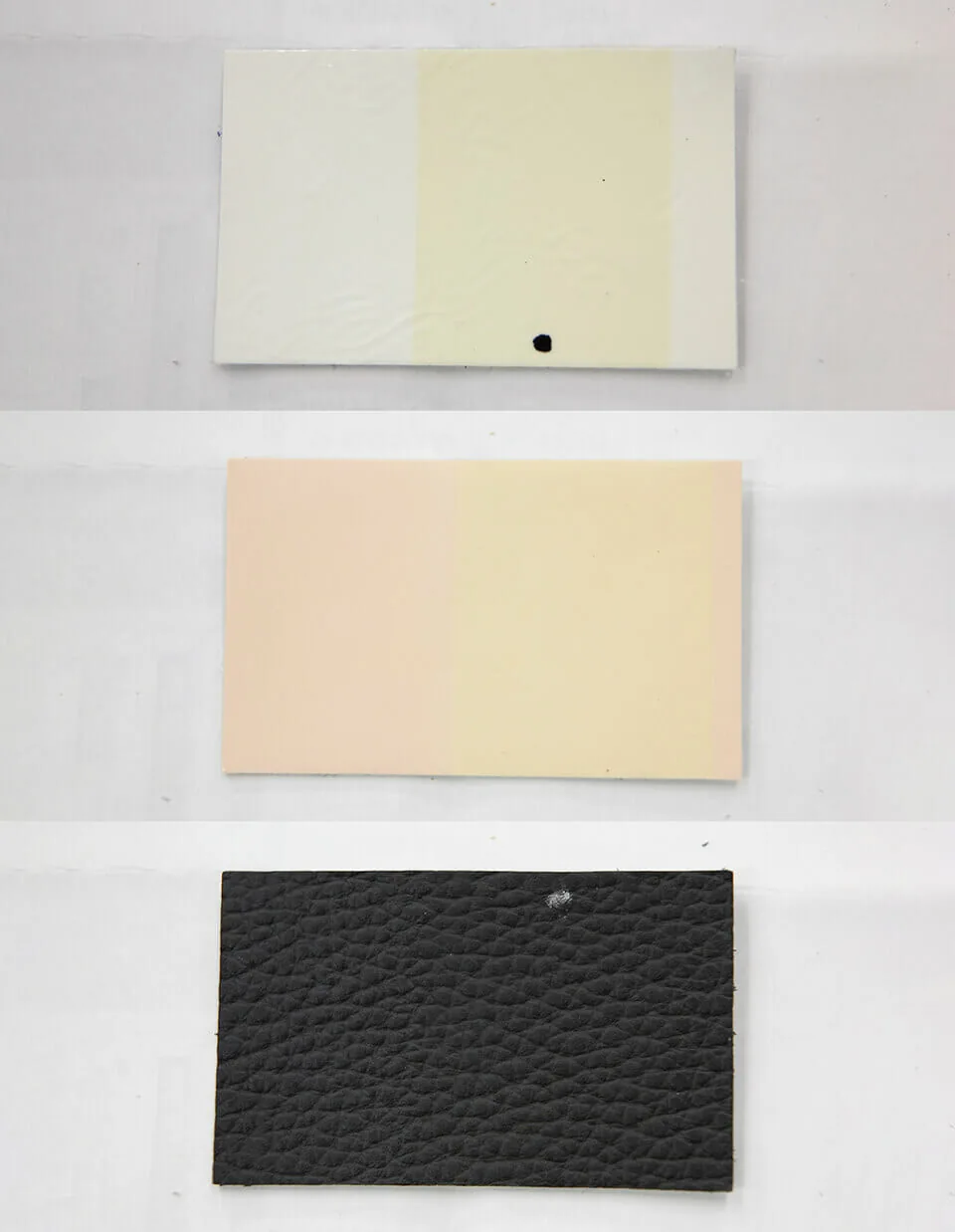
All materials deteriorate in sunlight, but with leather the change shows especially in its color. This also varies with the tanning and coloring methods and with the dye and its concentration. In general, vegetable-tanned leather changes more readily than chrome-tanned leather and tends to turn brown. Among colorants, dyes change color more readily than pigments. Pale leathers in particular fade to a greater degree, and the fading is more noticeable.
Lightfastness test
Leather pieces were tested in a lightfastness tester, which simulates exposure to sunlight at an accelerated rate. The photo at right shows the results after exposure to light under fixed conditions. Whitish leathers yellowed, whereas dark black showed little change.
Q. So is leather really vulnerable to water?
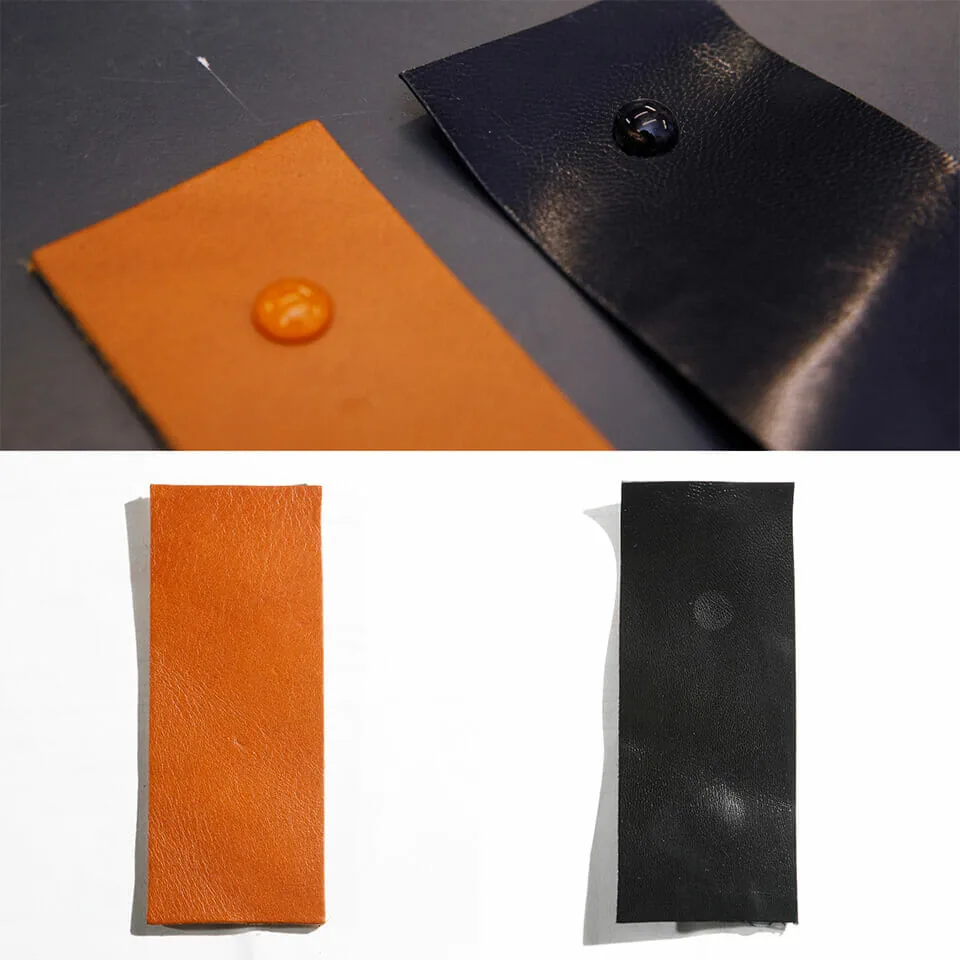
When leather gets wet, water soaks in, and as it dries the area may stain or the surface may bubble and become uneven, like a blister. For this reason, some leathers are finished with lacquer or urethane to make them less absorbent. Unfinished and napped leathers, which lack such a protective film, should be kept from getting wet as far as possible, and if they do get wet, the water should be blotted off right away.
Water drop test
Drops of water were placed on test pieces and wiped off after 30 minutes and after 16 hours, and the condition of the surface was observed. The brown leather showed no mark even after 16 hours. The black leather, being dark to begin with, showed almost no change in color, but after 16 hours a blister-like water spot appeared clearly. The difference has to do with the leather's surface finishing and other factors.