Leather is more than cowhide: a sample book of leathers
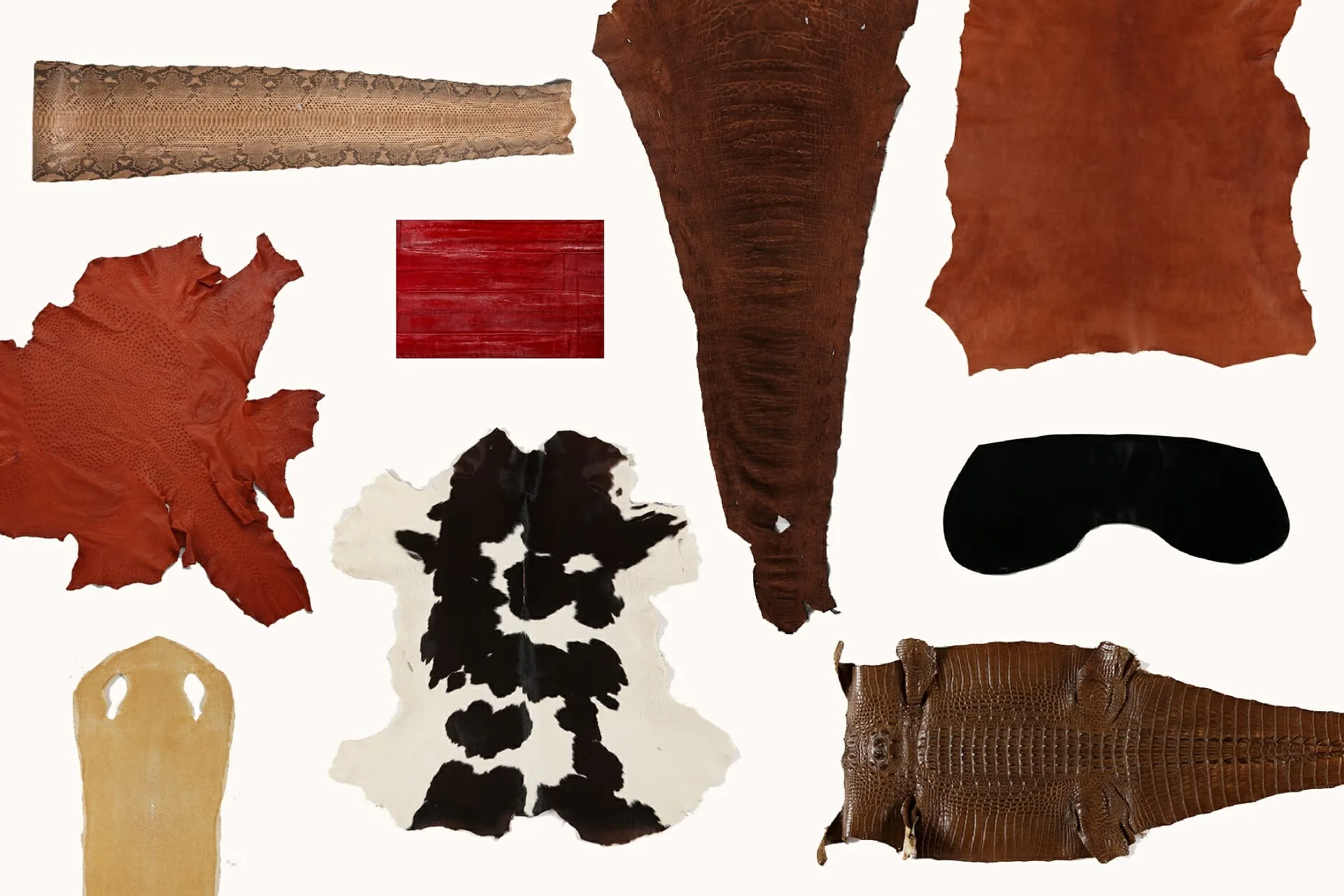
Leather is more than cowhide. Around the world, leather is made from a wide variety of animals, each with its own character and uses. Here we present the most representative leather materials in the form of a “sample book.”
Cordovan
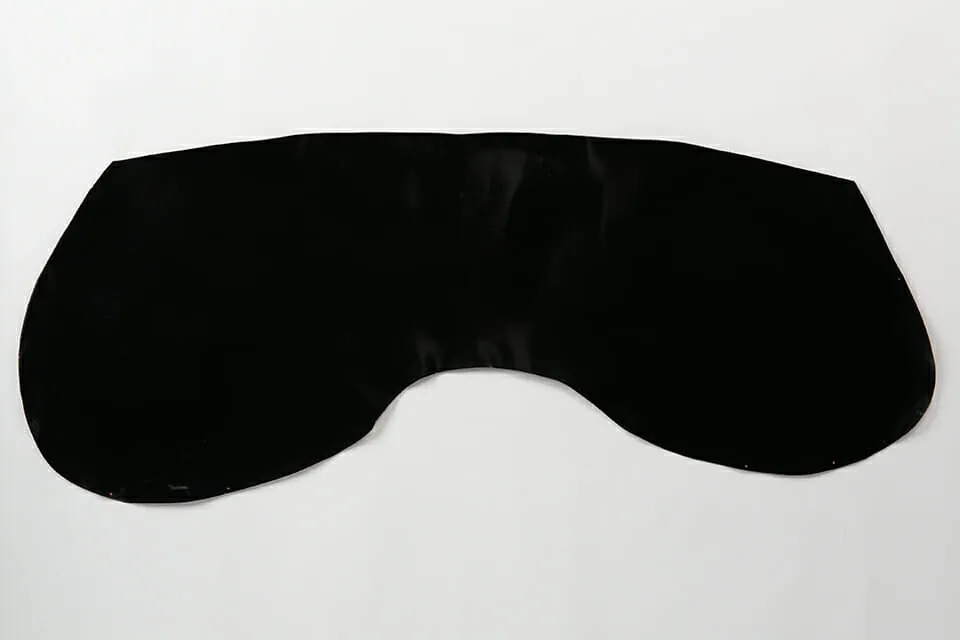
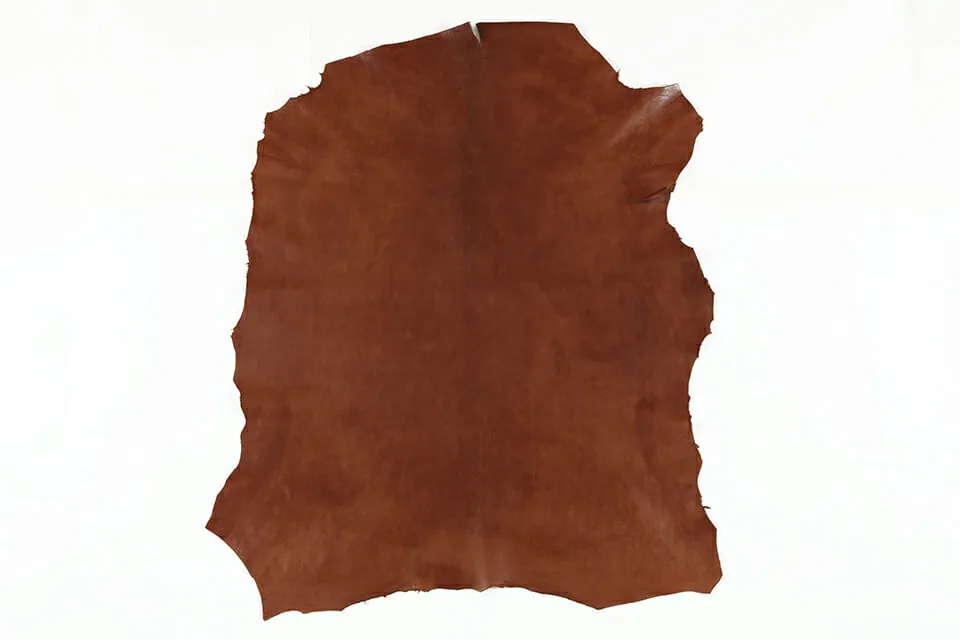
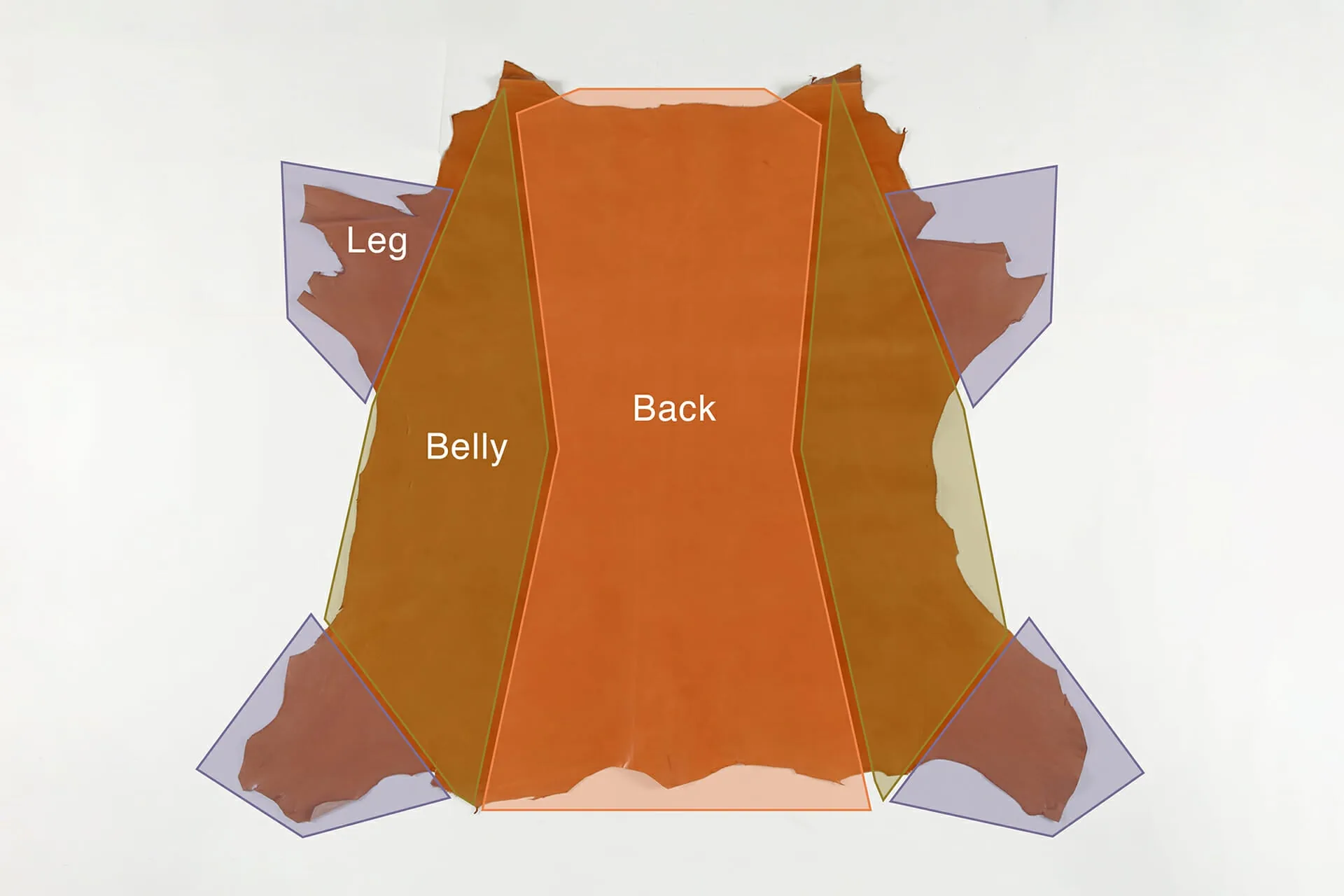
[Horse] From the rump of a rather large horse
Also nicknamed “megane” (spectacles), cordovan is known for being tough yet supple, with a beautiful sheen. It is made into men's accessories, bags, and premium randoseru school backpacks. Its luster deepens with use, which is part of its appeal.
Elephant
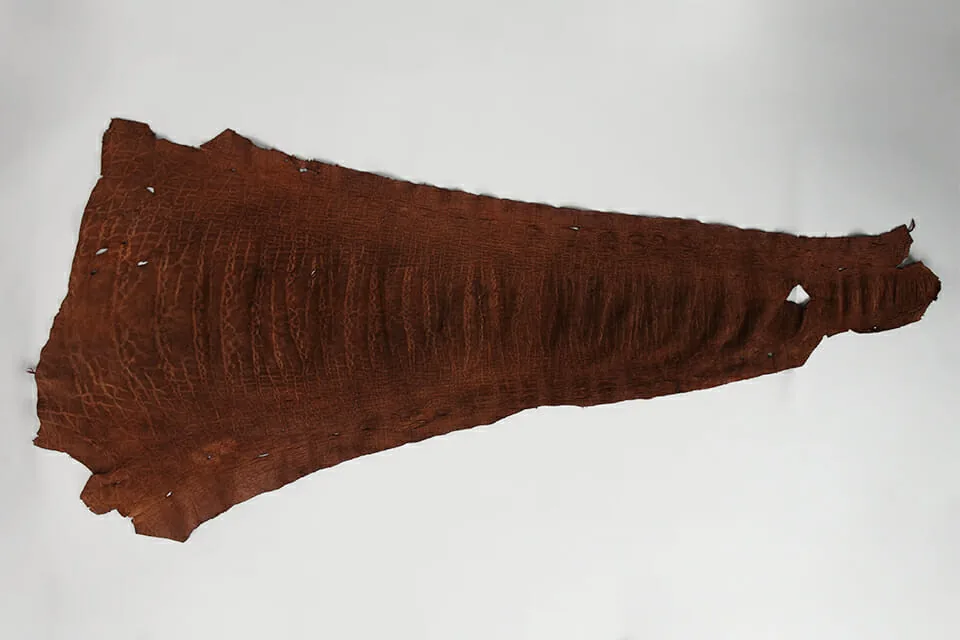
[Elephant] A nubbly texture and natural character
Pictured is leather from the trunk. Springy like a sponge, it is distinguished by its unique wrinkles and nubbly texture. Import restrictions apply depending on the country of origin and the processing involved. It suits items that call for robustness, such as bags.
Goat
[Goat] A blissfully smooth feel against the skin
Goatskin is so soft it is simply enchanting. Beautiful and durable, it conforms smoothly to the skin and drapes gracefully. It is often used for dresses, jackets, and gloves.
Crocodile
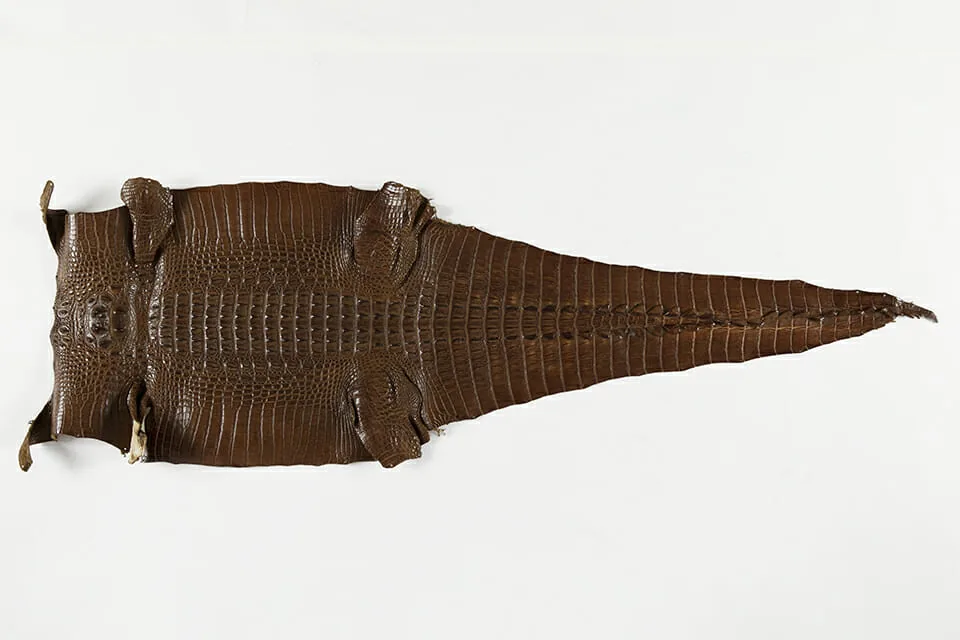
[Crocodile] A beautiful sheen polished with agate
This is the belly of a crocodile. Its distinctive, mysterious sheen is produced by polishing with an agate ball. The back is used for patches on denim jeans and as accents on bags and wallets.
Snake
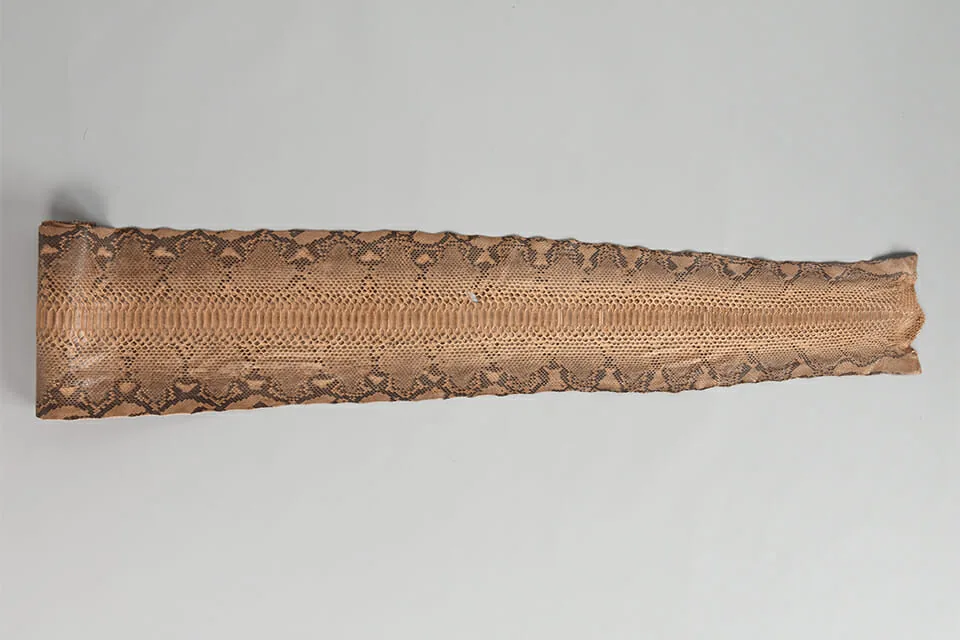
[Snake] A python more than 4 meters long
Snakeskin varies in pattern and scale shape depending on the species. This is a common python, measuring an astonishing 4 meters or more in length. Skins this large are used for bags and the like as well.
Eel
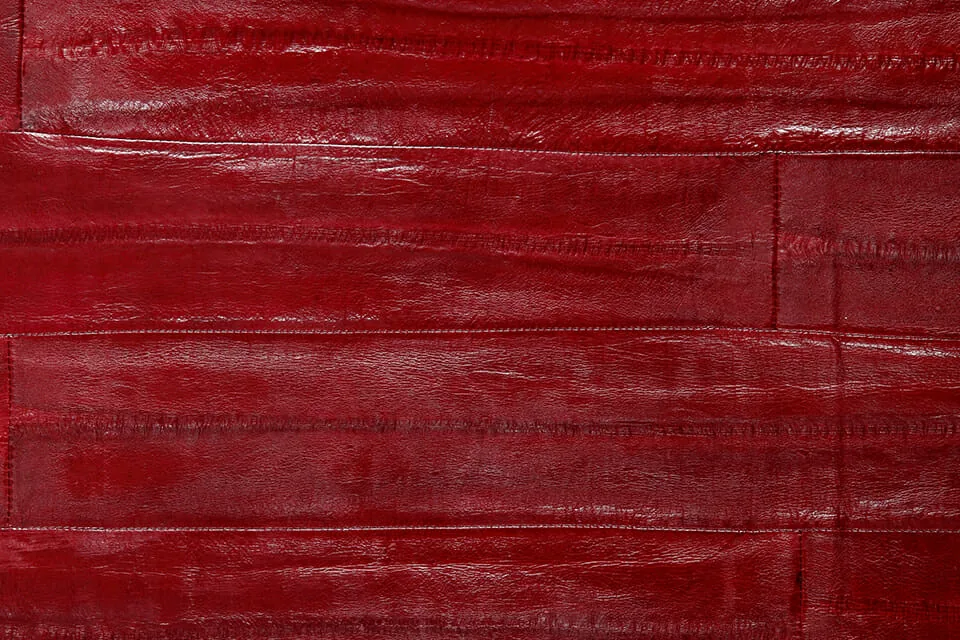
[Eel] As soft as sheepskin
Eel, too, is made into leather. Because each eel is small, the small pieces of skin are stitched together in a balanced arrangement. This processing is done in South Korea, and the precision of the work is remarkable.
Ostrich
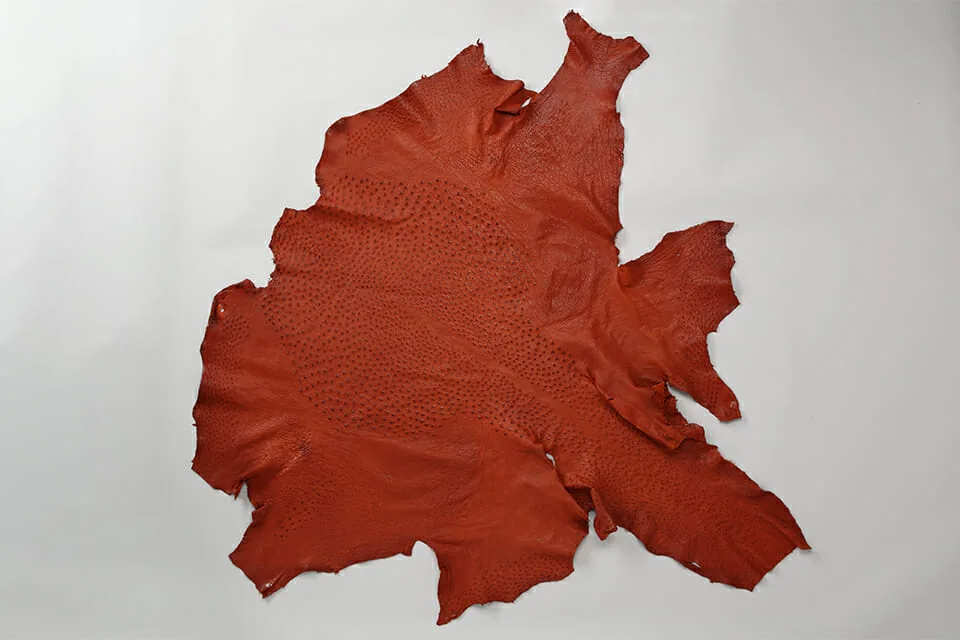
[Ostrich] Known for the quill marks left where the feathers were removed
The distinctive bumps are called “quill marks.” Said to be several times tougher than cowhide, ostrich leather is light and supple. About 80% of the world's supply comes not from wild birds but from farmed ostriches in South Africa.
Unborn Calf
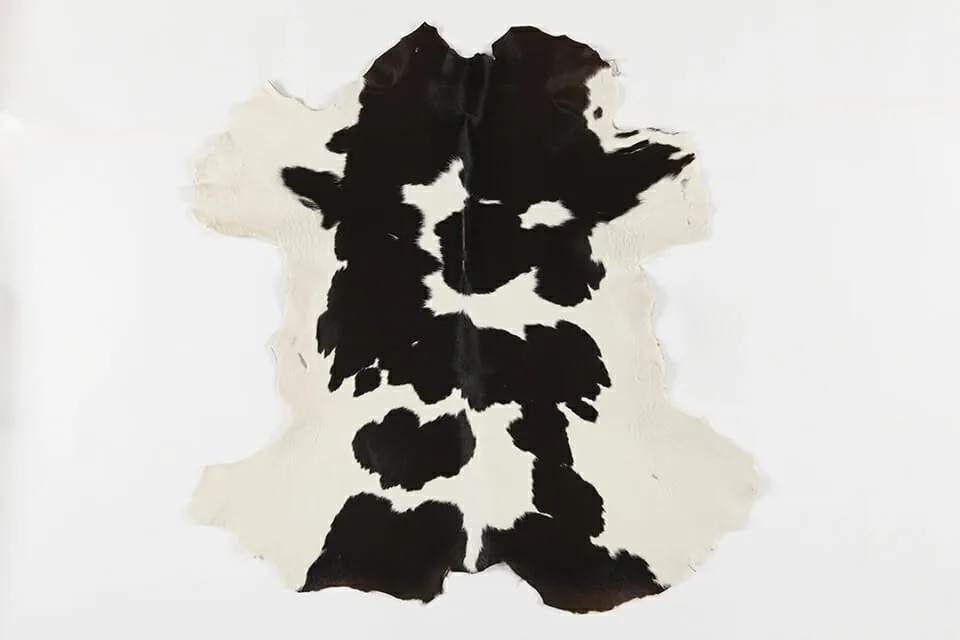
[Unborn calf] A calf before it is born
Harako (unborn calf) is made from the hide of stillborn calves. Densely covered in soft, fine hair, it is used not only for shoes and bags but also for cushion covers and rugs.
Stingray
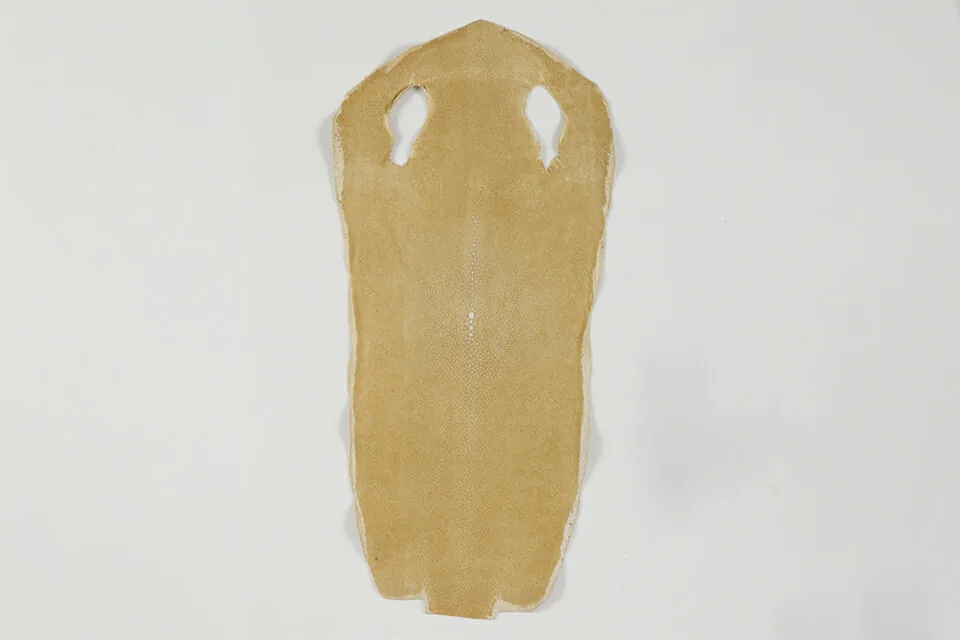
[Stingray] Hard, oval-patterned grain with a sharp look
Stingray leather. In Japan it has long been used for the scabbards and hilts of Japanese swords, among other things. Its hard, calcium-coated surface and pattern are distinctive, and a special cutter is needed to work it.