




GLOSSARY
- #Methods & Techniques27
- #Tools17 (selected. Tap again to clear)
- #Materials & Leather Types7
- #Bags & Small Goods3
- #Parts & Components2
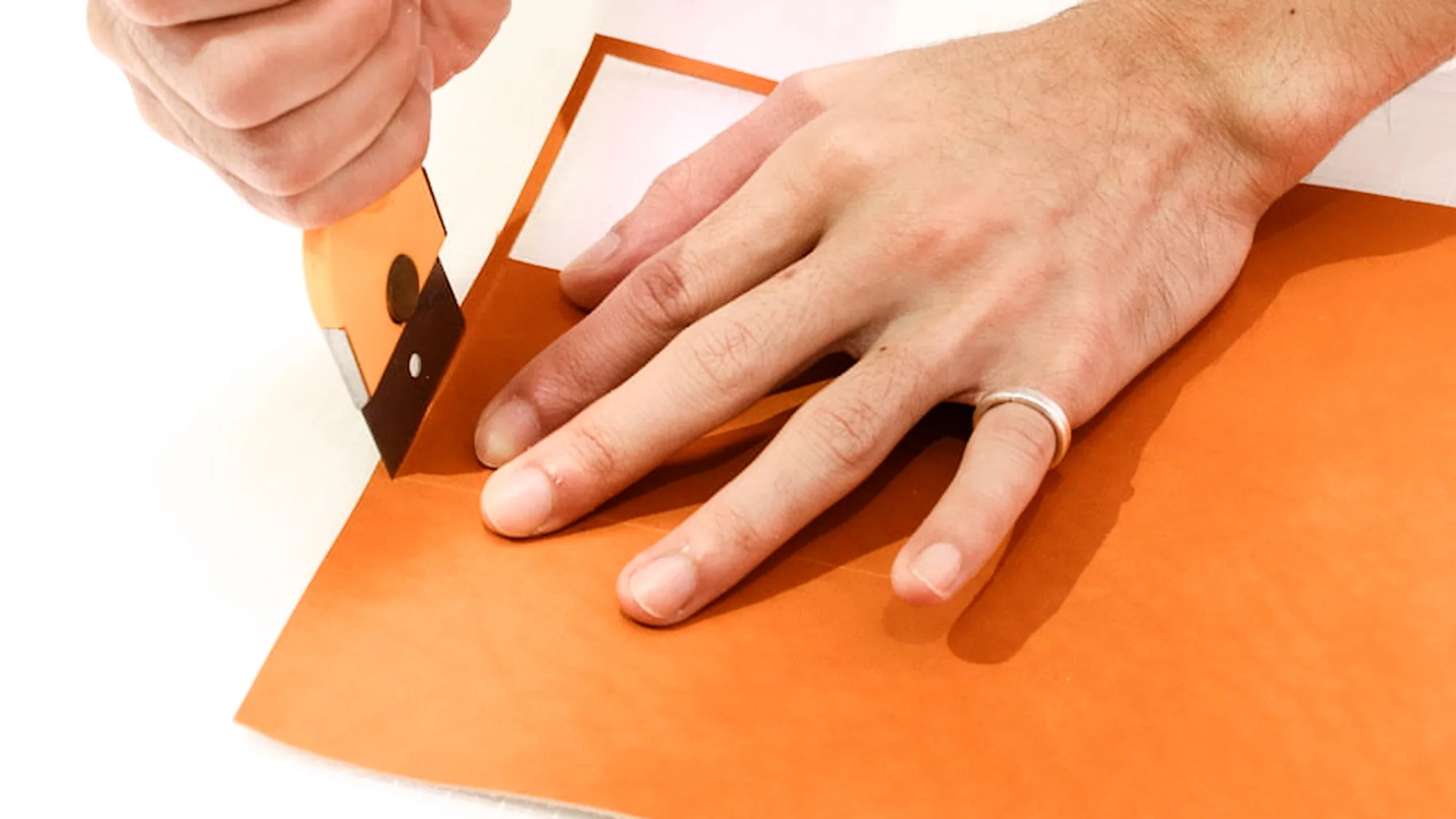
How to cut with a leather knife or skiving knife (bettachi)
Hold the handle lightly with your thumb on it. Angle the blade, insert the corner of the blade as if pushing it slightly forward, then pull it toward you.
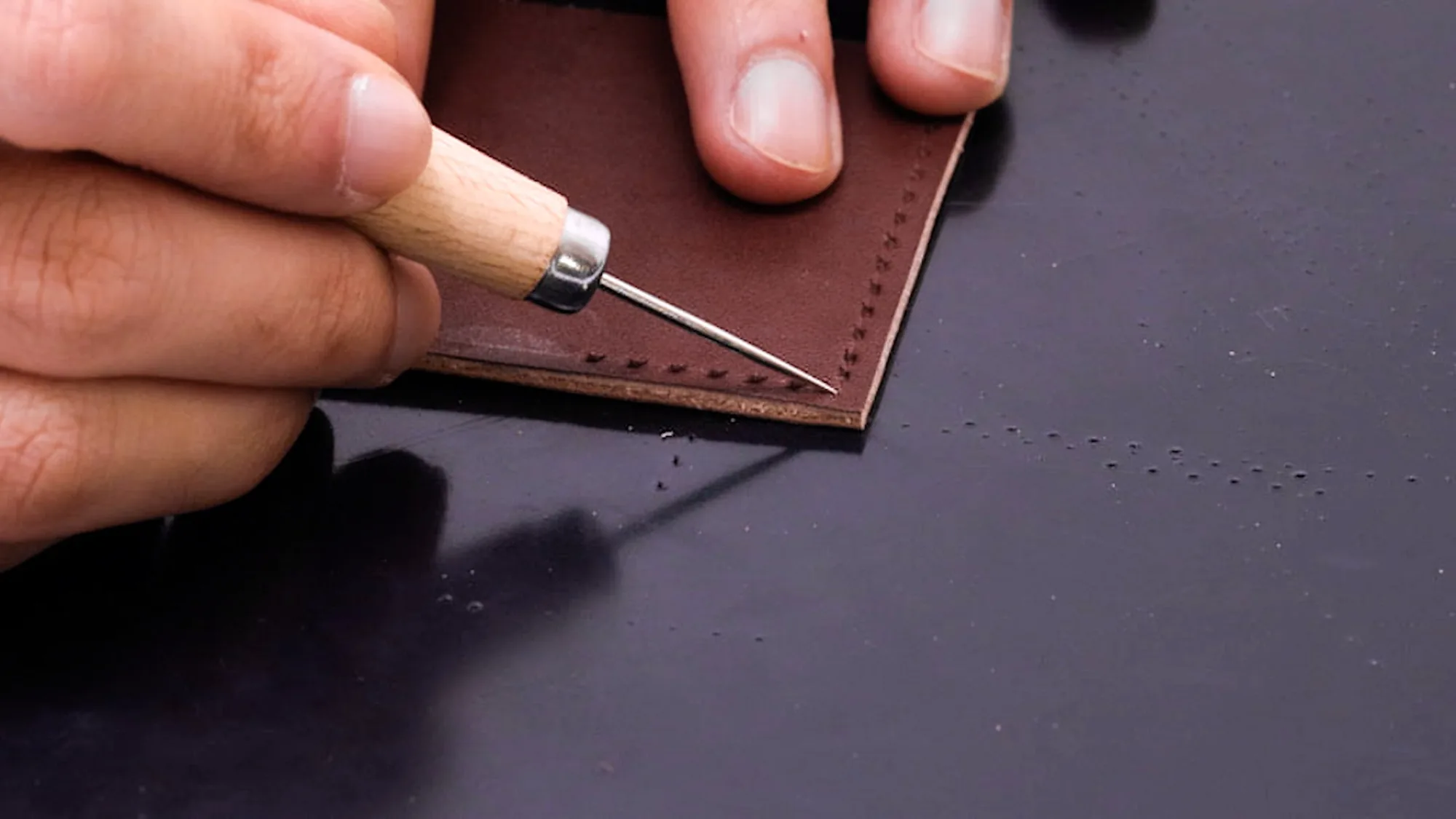
Punching holes at corners 2 (round awl)
Punch the holes with the diamond chisel, leaving the corner hole, then make the corner hole alone with a round awl.
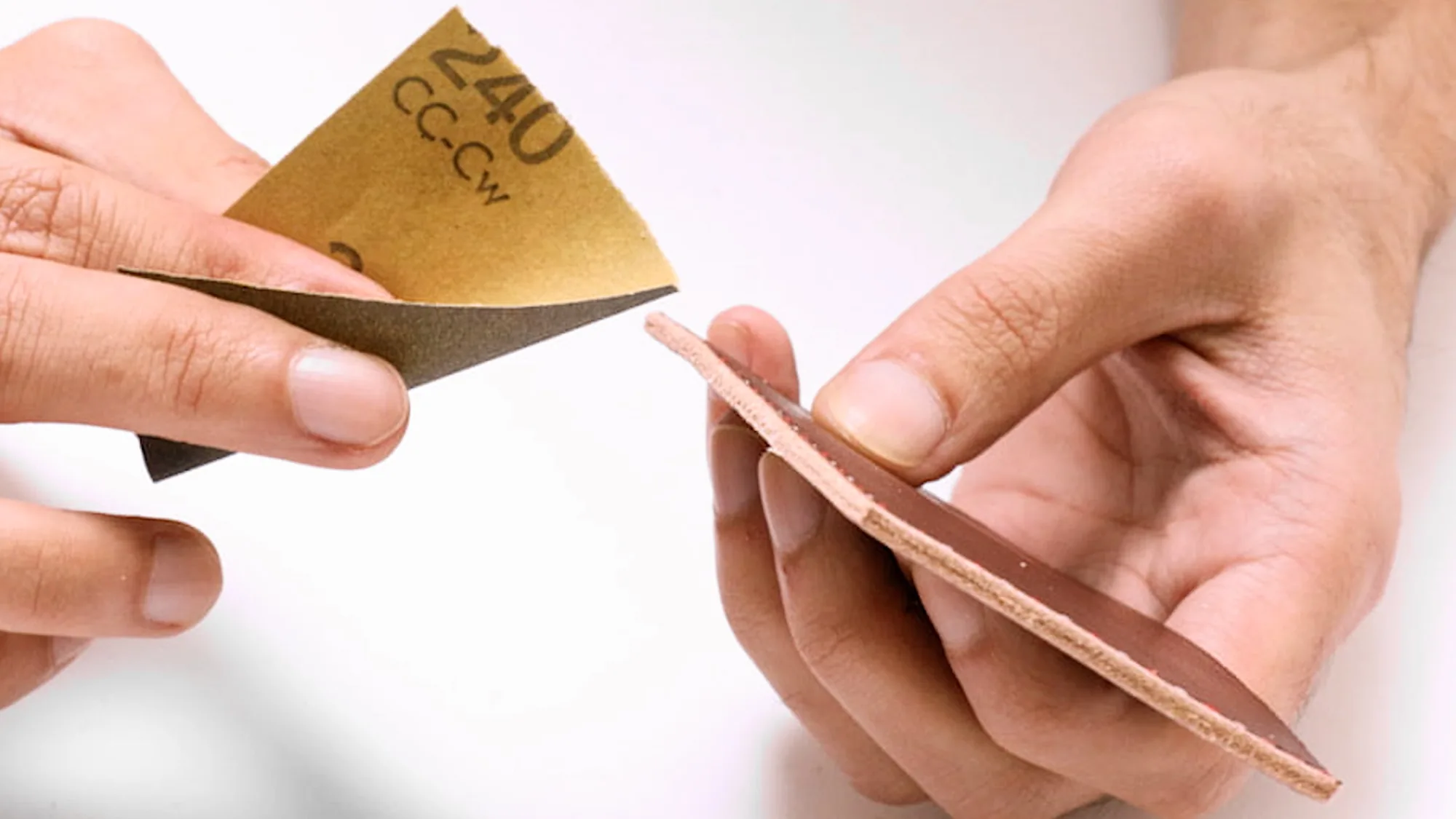
How to apply sandpaper
Keeping the beveled edge surface in mind, hold the sandpaper at a slight angle and sand in a single direction.
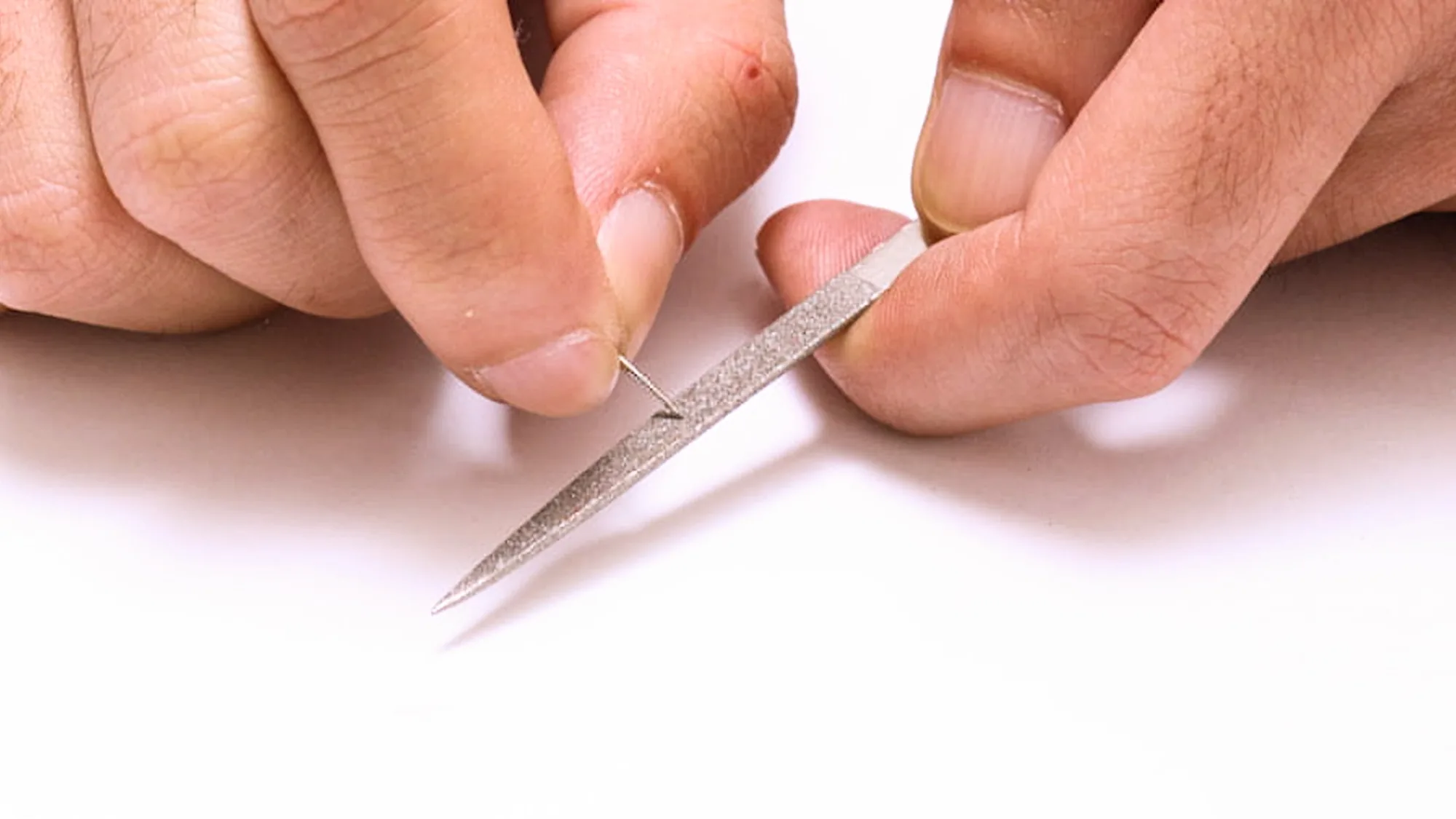
Preparing the needle
Western-style sewing needles have sharp points and tend to pierce the thread or the leather outside the punched holes, so the point is dressed.
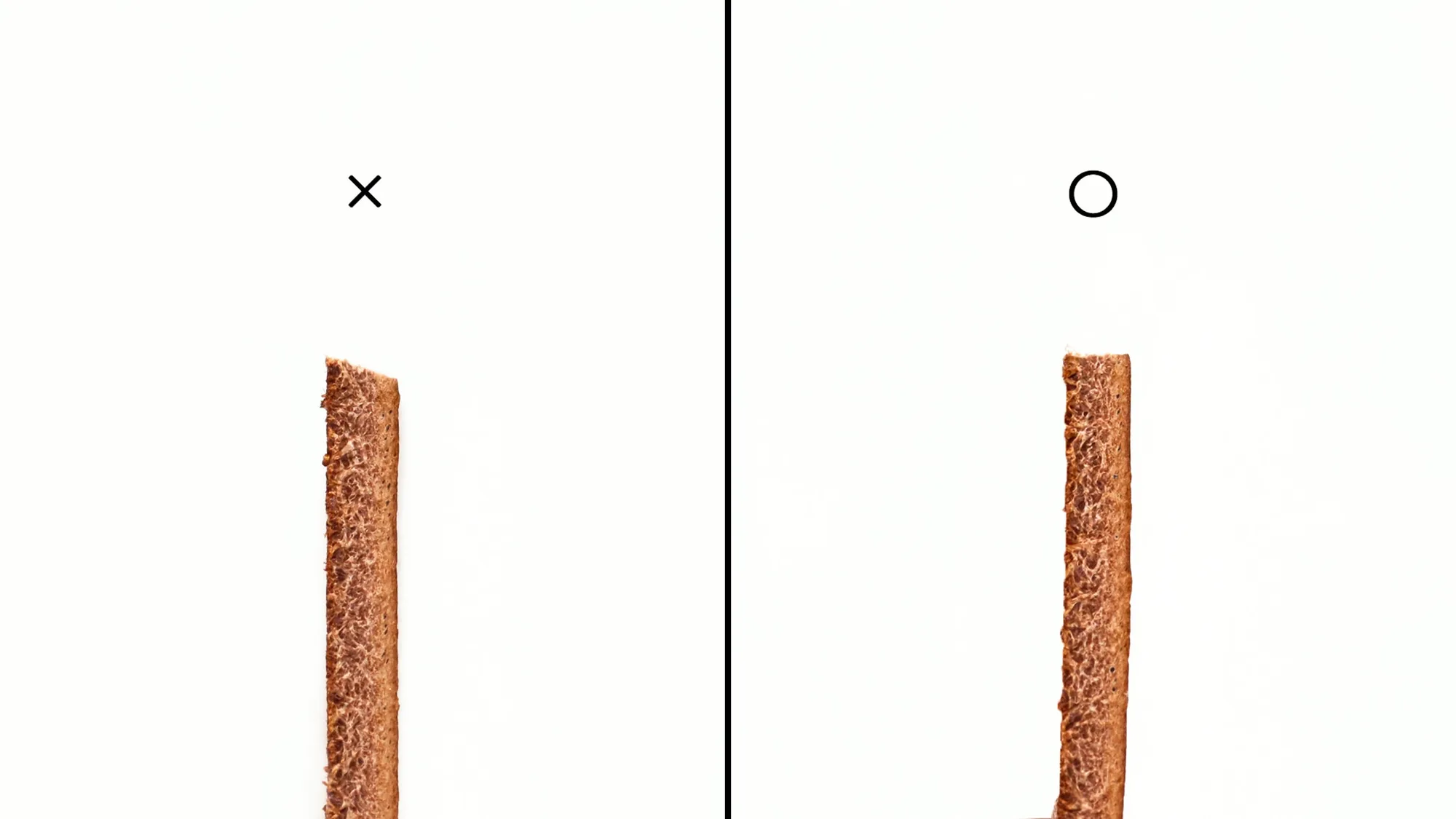
Points to note when using a leather knife or skiving knife (bettachi)
The blade of a leather knife or skiving knife (bettachi) is beveled on one side, so tilt it slightly as you cut to keep the cut surface at a right angle.
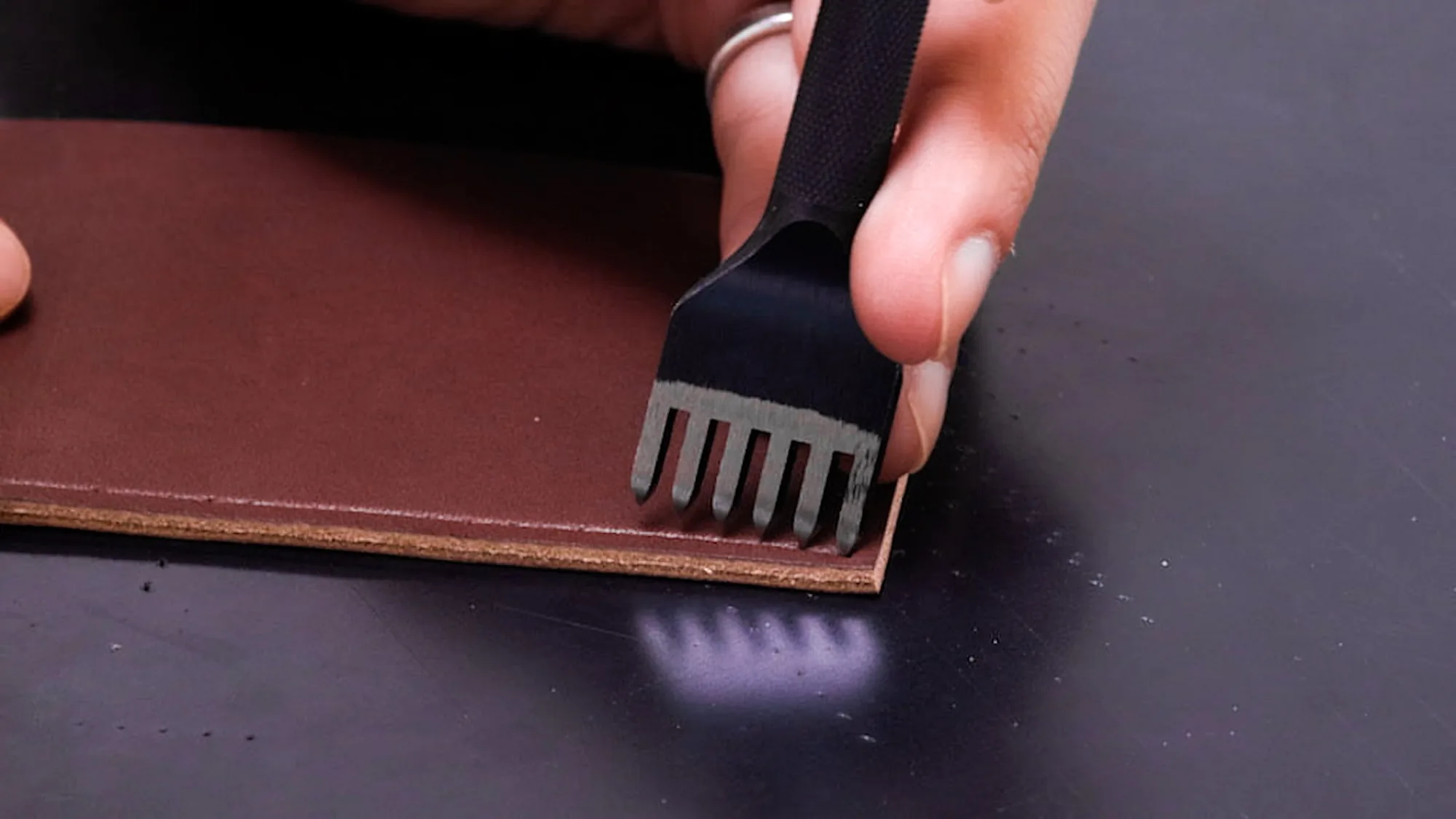
Punching holes at corners 1 (diamond chisel)
At corners, where the direction changes, punching the chisel as you would on a straight line will leave messy holes, so take care.
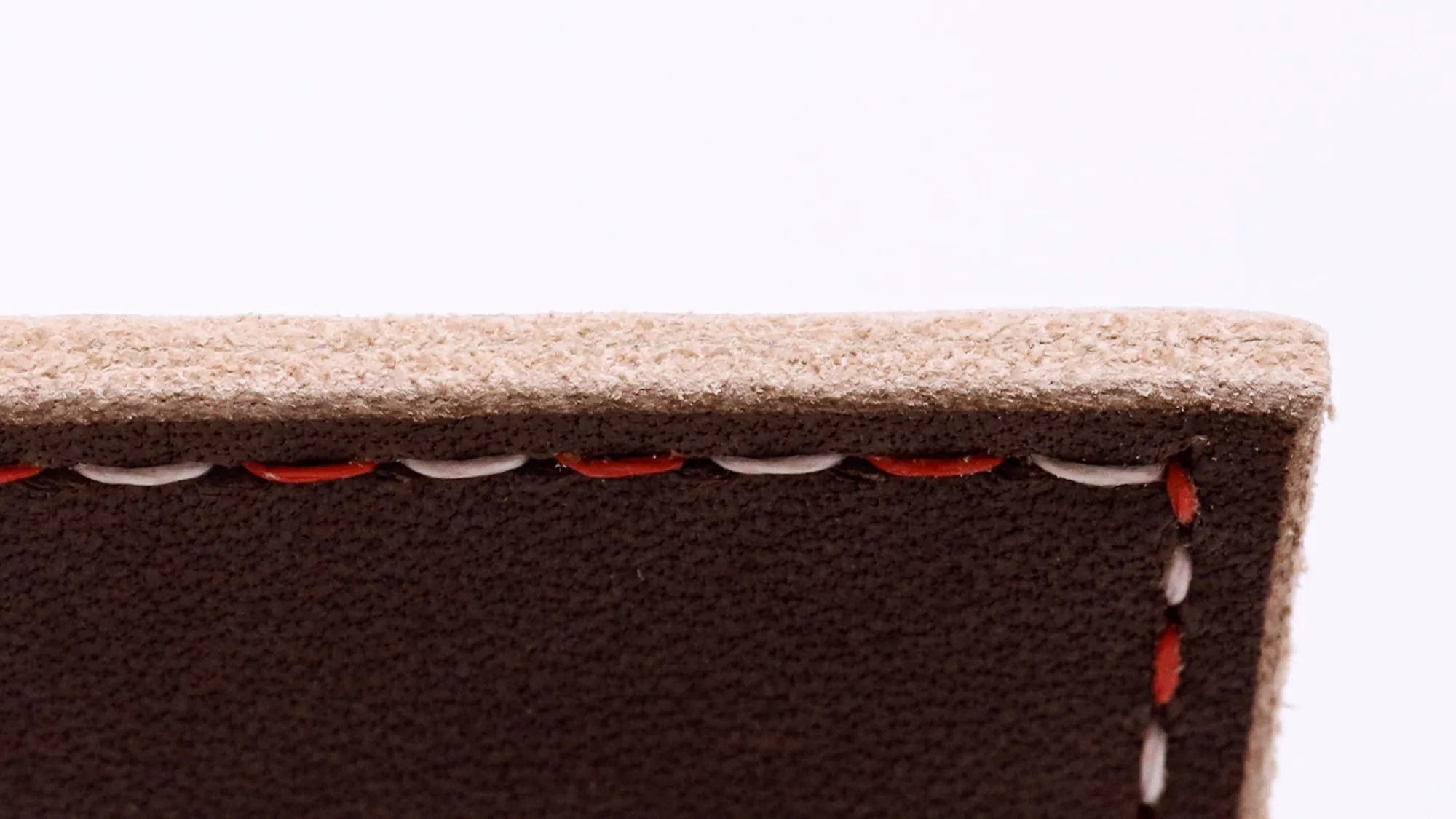
How to sand
Sand with #240-grit sandpaper (waterproof sandpaper is easiest to handle).
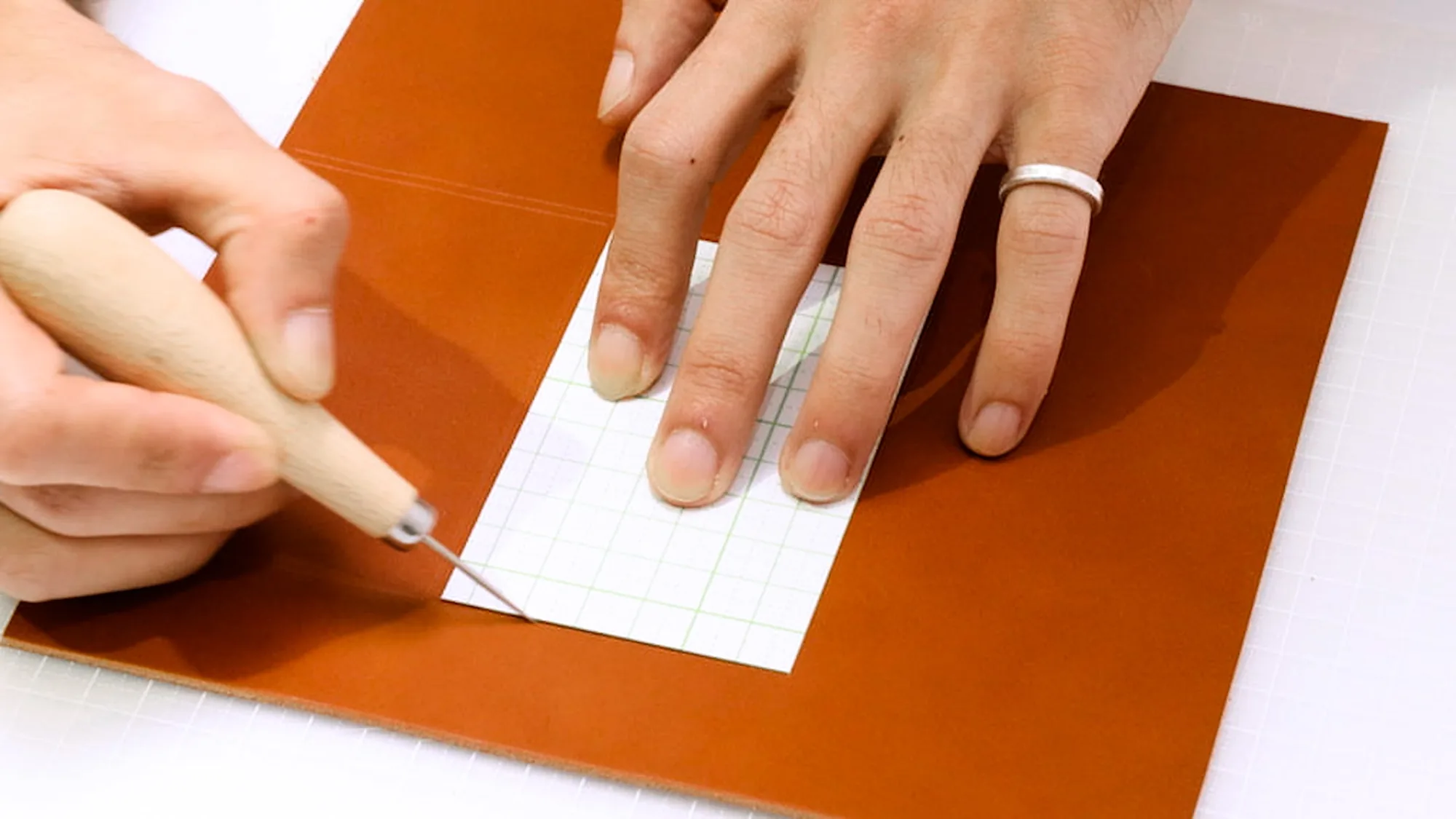
Marking out (kegaki)
Decide which part of the hide each piece will be cut from by laying out the patterns, then mark along them with a round awl, sewing needle, or similar.
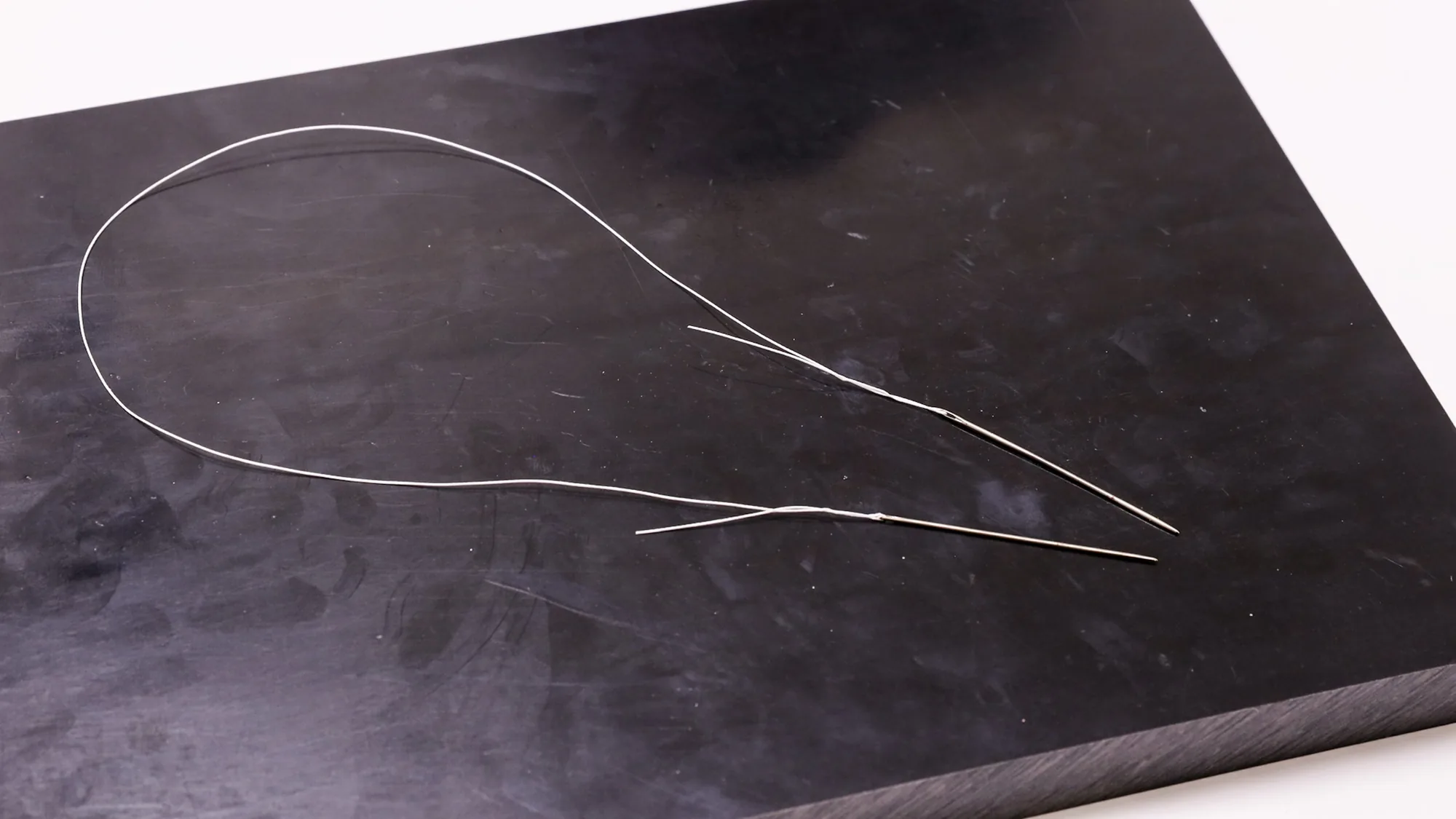
How to thread the needle
Prepare waxed thread 3–4 times the sewing length. Pierce it with the needle 2–3 times about 5 cm from the end, pass it through the eye, and pull toward the tip.